TSE Group, IPB University Further Joint Research on Papuan Endemic Fauna

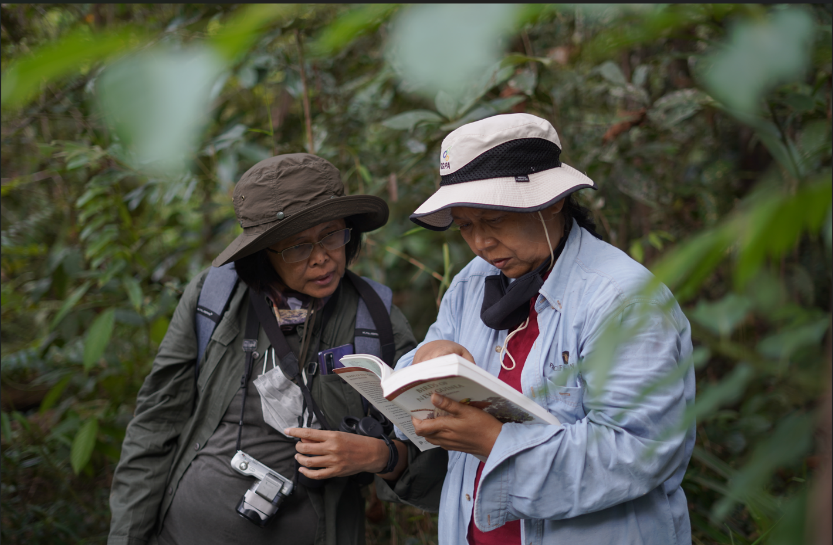
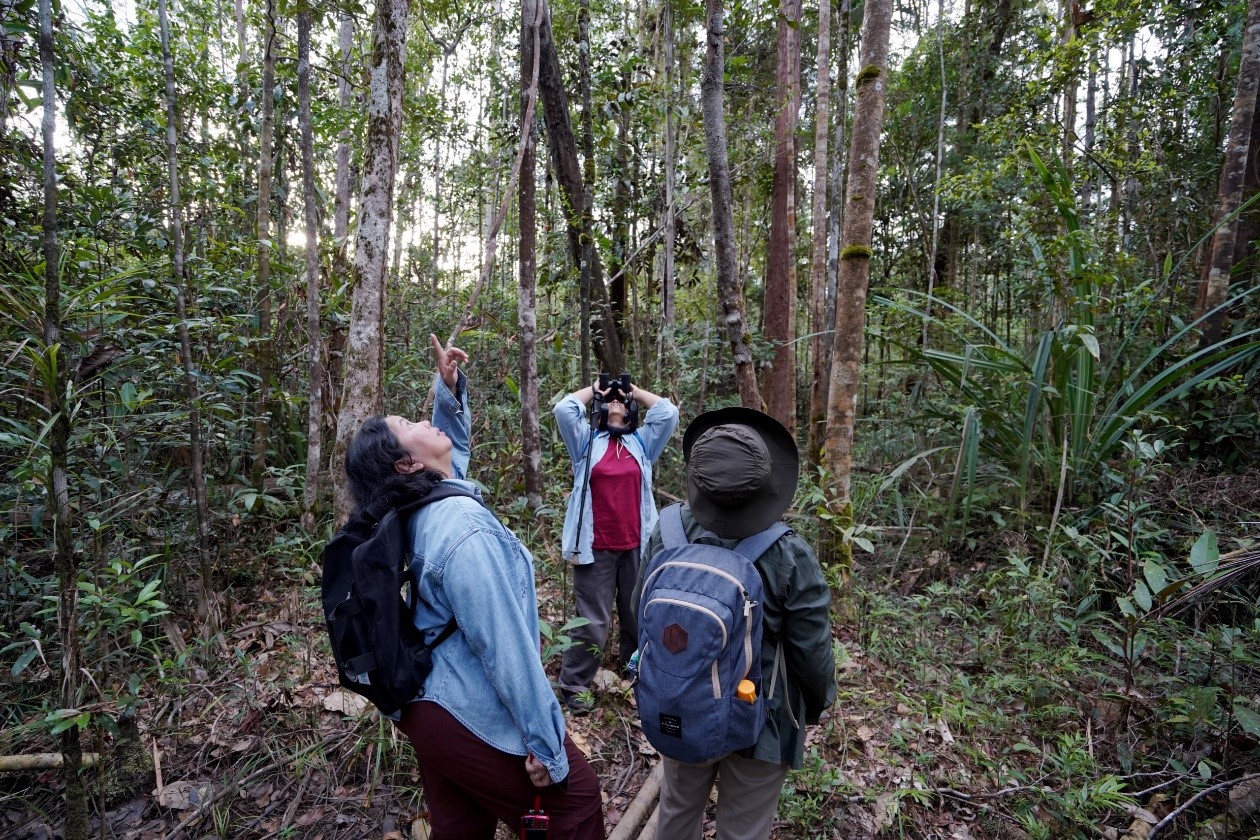
Photo: IPB University team doing biodiversity monitoring at a conservation area near TSE Group’s operational site in South Papua. This activity supports endemic fauna protection efforts in the region

MERAUKE – Papua Conservation, the biodiversity project by IPB University and Tunas Sawa Erma (TSE) Group, enters a new chapter. Recently, it reached its fifth year of research in the conservation area around TSE Group’s operational site in South Papua.

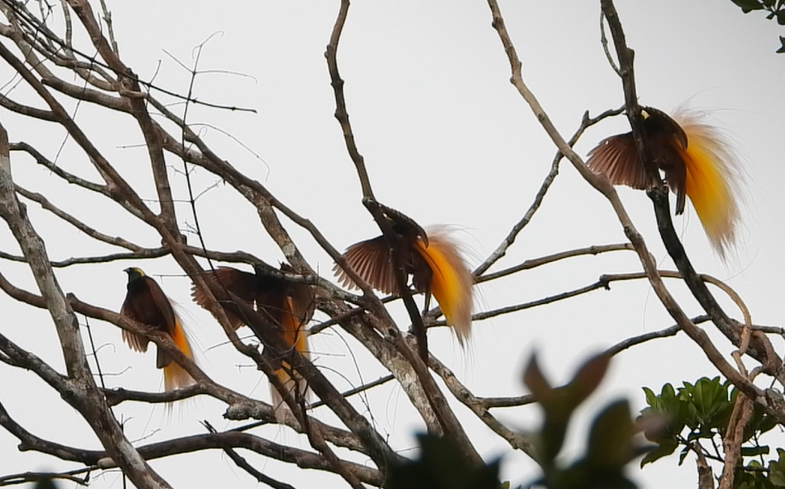
This area includes High Conservation Value (HCV) and High Carbon Stock (HCS) forests previously identified by the company. Such places are home to the local endemic wildlife — particularly the greater birds-of-paradise (Paradisaea apoda) and pig-nosed turtles (Carettochelys insculpta).

“We believe effective conservation is supported by scientific research and data. Through [our] collaboration with IPB University, we hope to enrich public understanding of the ecological diversity in Papua, while improving the systems that manage conservation areas around our site,” said Luwy Leunufna, TSE Group’s director on Friday (7/8/2026).

Papua Conservation partly focuses on the greater birds-of-paradise, with observational activities centered around a critical period in the annual migration cycle. It’s this period when birds of various species travel to warmer regions, readying themselves before the breeding season.

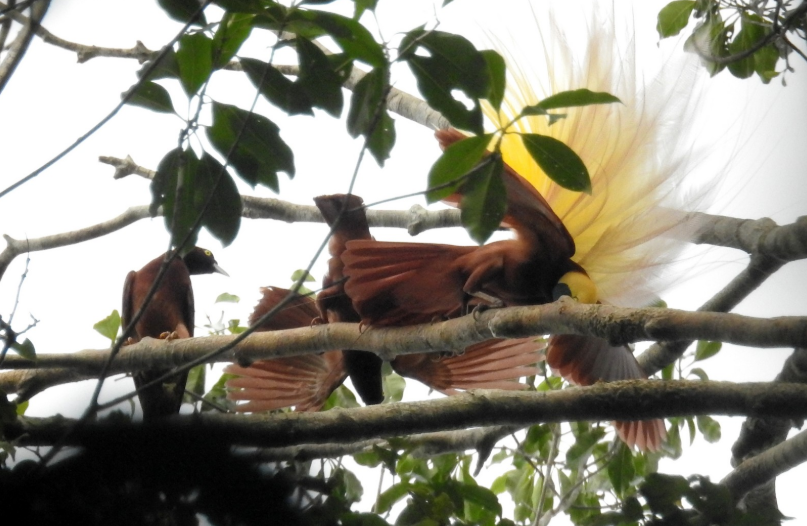
With this in mind, the project later conducted a 40-day study on lekking, a behavior in which male birds-of-paradise dance to attract female counterparts.

Another focus of Papua Conservation is the pig-nosed turtles. Following a previous examination of this High Conservation Value species, Prof. Ani Mardiastuti, Dr. Yeni Aryati Mulyani, and six other members of the research team will track their reproductive behavior.

Monitoring enclosures will be installed around the habitat as the team undergoes each stage of the intensive observation period (mating, egg-laying, and hatching). This activity is scheduled to be completed after approximately 90 days to enable comprehensive data collection.

The research team will also interview local community members and deploy Global Positioning System (GPS) devices in their study of the turtles’ movement patterns and activity in the water. They hope to gain insight into the turtles’ home range, habitat preferences, and daily routine.

Papua Conservation’s fifth anniversary demonstrates that academia-private sector partnerships can contribute to biodiversity conservation and viability in Papua. This ongoing project is expected to provide stronger data to reinforce conservation area management and wildlife protection initiatives. (PR)
 

Meet the Great Yellow Bird of Paradise: How It Differs from Other Species

Papua is not only rich in forests and culture, but is also home to one of the world’s most iconic birds: the bird of paradise. Of the 43 species of birds of paradise, 38 can be found in eastern Indonesia. This bird is famous for its beautiful and striking plumage, so much so that it has been dubbed the “bird of paradise.” Among its many species, one stands out in particular, the Great Yellow Bird of Paradise (Paradisaea apoda).

Morphology: The Appearance That Makes It Iconic

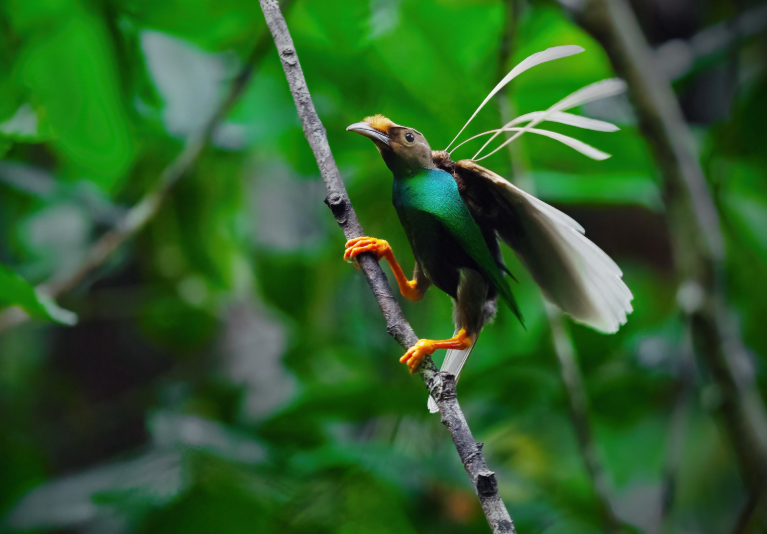
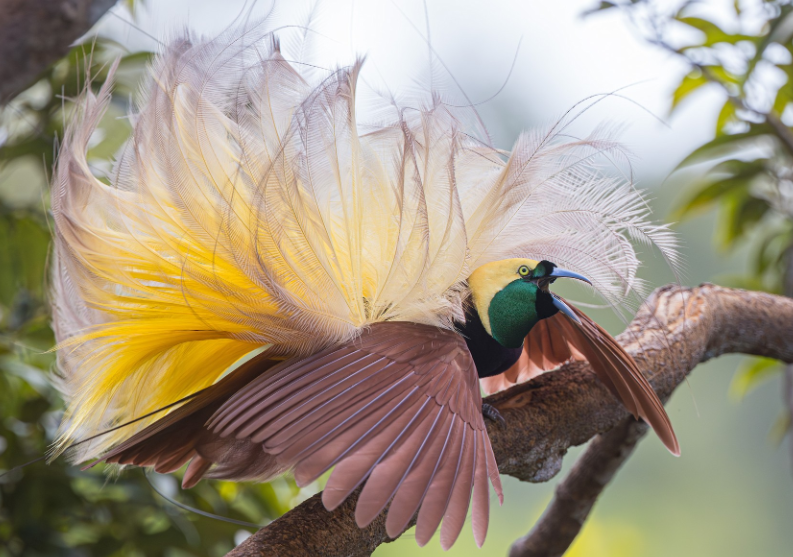
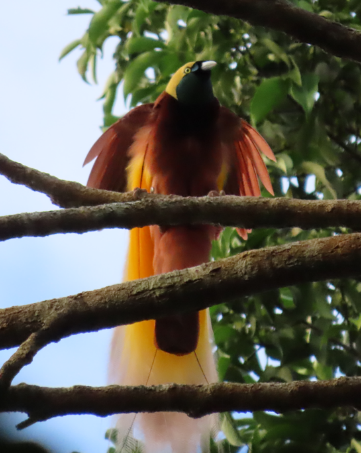
The Great Yellow Bird-of-Paradise has very striking characteristics, especially in the male. It can reach a length of 43 cm, not including a pair of long tail feathers that trail like golden ribbons through the air. Its head is adorned with a yellow crown, an emerald-green throat, a dark-brown chest, and golden-yellow decorative feathers. In contrast, the female has a much simpler appearance. Her body is smaller, about 35 cm, with plain maroon plumage and no striking adornments. Yet this simpler appearance makes the male’s colorful feathers stand out even more. The male’s extraordinary plumage serves as his primary tool for attracting the female’s attention.

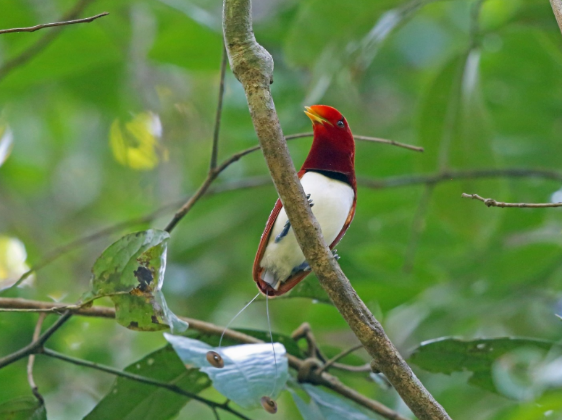
The King Bird of Paradise (©Nigel V)

By comparison, the king bird of paradise (Cicinnurus regius) is much smaller, measuring only about 16 cm. Even though it is small, it remains one of the most eye-catching birds-of-paradise. The male is bright red with a white breast, an emerald-green throat, striking blue legs, and a unique spiral tail. Combined with the fan-like feathers on its shoulders, this tiny bird looks like a living gem when it dances.

Behavior: Exotic Mating Dances

The mating behavior of the great yellow-billed bird-of-paradise is one of the most captivating natural spectacles in the forests of Papua. Male birds perform a distinctive dance on high branches, displaying their flowing golden-yellow plumage and singing their characteristic song. Interestingly, before the performance begins, the male cleans the branch he is perched on so that his body stands out more clearly against it. This spectacle takes place in an arena called a lek, where several males gather and compete to put on their best display in order to attract the attention of females.

Standardwing Bird of Paradise (©JJ Harrison)

It turns out that each species of bird-of-paradise has its own unique courtship dance. While the Great Yellow Bird-of-Paradise dances in the canopy of tall trees, the Standardwing Bird of Paradise (Semioptera wallacii) from Halmahera does things differently. This species has a distinctive courtship display in which it fans out its shoulder feathers like a fan while hopping along the lower branches of the forest. This variation in dance demonstrates the rich diversity of courtship behaviors within the bird-of-paradise family, while also underscoring its role as a symbol of Papua’s magnificent biodiversity..

Limited Distribution

The Great Yellow Bird of Paradise (Paradisaea apoda) actually has a fairly limited range compared to some other species of birds-of-paradise. This bird of paradise can only be found in the lowland forests of southern and southwestern Papua, extending to the central highlands of Papua New Guinea. Interestingly, they also inhabit Aru Island in Southeast Maluku, making them one of the truly distinctive endemic species in eastern Indonesia.

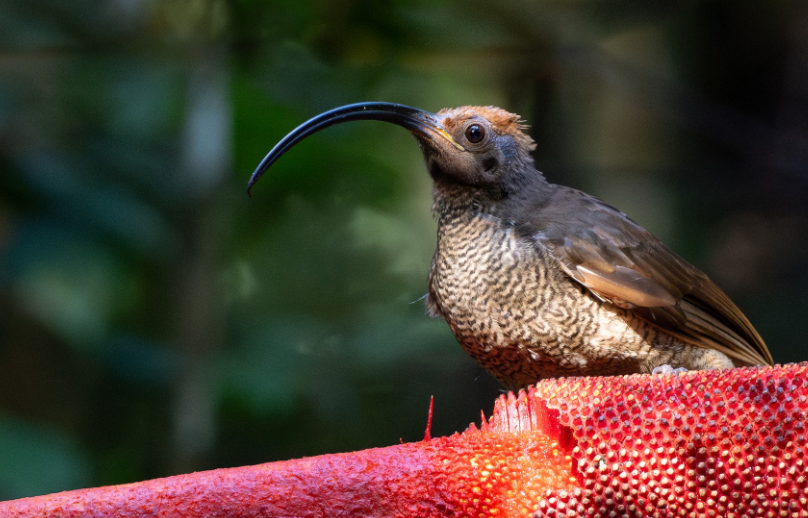
Black sicklebill (©Phil Chaon)

Each species of bird of paradise has a unique distribution pattern. Some are able to adapt to many regions, while others are restricted to a single island. For example, the king bird of paradise (Cicinnurus regius) has a fairly wide distribution in the southern and western parts of Papua, extending to the Aru Islands. This species is also relatively flexible, as it can be found in both lowland forests and secondary forests.

In contrast, the Standardwing Bird of Paradise (Semioptera wallacii) is an example of extreme endemism. This bird is found only on Halmahera Island in North Maluku, making its presence truly unique to that region. There is also the Black sicklebill (Drepanornis sp.), which inhabits the central mountainous region of Papua. This species has specialized adaptations to the cooler, more humid montane environment.

These differences in distribution patterns demonstrate just how diverse the ways are in which each species adapts to its habitat. From lowlands to mountains to small islands, birds of paradise truly reflect the ecological richness and evolutionary history of Papua and eastern Indonesia.

TSE Group’s Conservation Initiative in the Asiki Region

The forests managed by TSE Group in Asiki, South Papua, are home to an extraordinary biodiversity. This is more than just a tropical rainforest, it is home to many endemic and protected species. In 2021, the TSE Group, in collaboration with the Tropical Forest Foundation, conducted a survey to assess High Conservation Value (HCV) areas within their concession. The results were quite surprising: 13 species of mammals, 61 species of birds, and 23 species of herpetofauna (amphibians and reptiles) were recorded as living there. These findings underscore the importance of this area as a natural habitat that supports the diversity of species unique to Papua.

Water Networks, the Heart of the Ecosystem

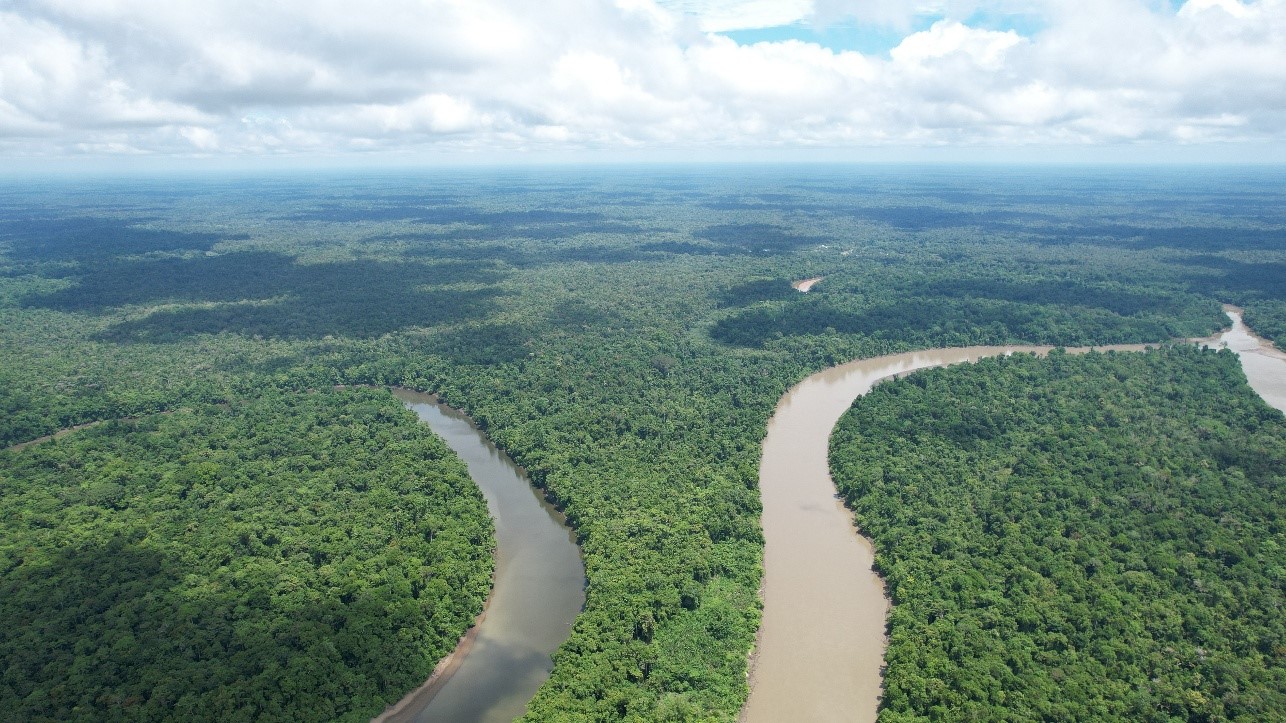
The TSE Group’s concession area in South Papua features a unique topography. The landscape stretches from north to south, with three major rivers flowing through nearly the entire region, plus a river in the northeast that empties into a natural lake. This network of waterways not only enhances the landscape but also serves as a lifeline that maintains a stable water supply throughout the year. The abundant water allows the forest vegetation in this area to thrive, creating a lush, green environment rich in food sources. The combination of the landscape’s topography, water availability, and dense forest cover makes this area an ideal habitat for a wide variety of wildlife.

The forests within the TSE Group’s management area are part of a large ecosystem that stretches from the Uwim Merah River and the Muyu River to the Fly River. Administratively, this area is located in Boven Digoel Regency, South Papua. The forest type is classified as lowland tropical rainforest growing on dry land. Within these forests stand a diverse array of tree species with a rich and complex vegetation structure, creating a lush green landscape that serves as a habitat for many species of wildlife.

A Real Commitment to Protecting the Birds of Paradise

TSE Group believes that business and conservation can go hand in hand. The company actively integrates sustainability principles into its forest management practices, including the protection of key species such as the Great Yellow Bird of Paradise (Paradisaea apoda). By working with research institutions and local communities, the company aims to protect the forest while supporting sustainable production. This helps maintain a healthy ecosystem for the future.

As a first step in supporting conservation, the Papua Conservation Team conducted research to gain a deeper understanding of the Great Yellow Bird of Paradise’s presence within the company’s operational area. The team successfully mapped the habitat, estimated the population size, and documented the tree species and forest conditions preferred by this “bird of paradise.” Most notably, the team paid special attention to the “lek trees”—the stage where male birds perform their courtship dances and which play a crucial role in their life cycle. These findings will serve as a vital foundation for ensuring that the forest is managed sustainably while providing a safe haven for this extraordinary endemic species of Papua.

Observation Tower: From Research to Education

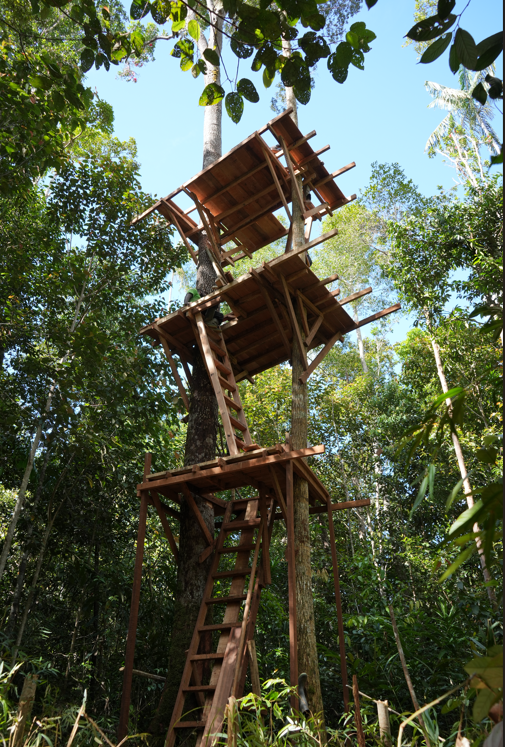
As part of concrete conservation efforts, in November 2022 the company built a 20 meter tall (four floor) observation tower in the forest area. The tower is located right next to a tree known as a “lek”—the dancing ground where male Great Yellow Birds of Paradise perform to attract mates. From this tower, researchers can observe the birds without disturbing their natural behavior. In addition to serving as a research center, the tower also opens up new opportunities for environmental education and even conservation-based ecotourism in the future.
From Data to Action: Protecting the Bird-of-Paradise Population

The Great Yellow Bird-of-Paradise (Paradisaea apoda) truly deserves to be called the star of the Papuan rainforest. Its shimmering golden plumage and graceful courtship dance always never fails to capture attentions. But beauty alone does not guarantee survival in the wild. We also need to know how many of them are left. We can only find that answer through field research. Every time researchers record an encounter with these birds of paradise, we are one step closer to understanding the best way to keep them dancing in the forests of Papua.

Tracking in Forests and Rivers

In a joint study conducted by the TSE Group and IPB University, a research team explored the forests of Papua all the way to the riverbanks in search of the Great Yellow Bird of Paradise. The results were quite interesting: out of 39 spotting locations, 56 of these birds of paradise were recorded—11 males and 45 females. They appear to thrive in a variety of habitats, ranging from primary and secondary forests to bushes.

What’s even more interesting is that the numbers vary from each region. Thirty-seven birds were found in the PT Inocin Abadi concession, compared to just 15 in the PT Tunas Timber Lestari concession. In fact, four birds were still spotted along the banks of the Kao and Muyu Rivers, indicating that rivers are not merely waterways but also vital corridors for the survival of birds of paradise.

A Voice Heard, A Hidden Figure

Interestingly, not all encounters involved direct sightings. At some locations, researchers only heard the distinctive call of the Great Yellow Bird of Paradise without actually seeing the bird itself. This demonstrates just how skillfully this bird hides within the dense forest canopy. Even so, the loud calls of the males, calling to females from their perches, serve as a strong indication of their presence.

Activity times were also an important finding. The Great Yellow Bird of Paradise is active from around 7:00 a.m. until 5:00 p.m., with peak activity occurring from midday through the afternoon. This pattern helps researchers determine the best times to conduct observations.

An Unbalanced Male to Female Ratio

One particularly striking finding concerns the ratio of males to females. In the first study, the ratio was found to be skewed—only 1 male for every 4.1 females. There are many possible causes. It could be that the male population is naturally smaller. However, there is also strong evidence that poaching targeting males with beautiful plumage has contributed to their decline in the wild.

Interestingly, the results of the study the following year were quite different. Because it was conducted during the breeding season, a greater number of males were observed—60 males and 40 females (a ratio of 1:0.6). This makes perfect sense, since during the breeding season males typically put on a spectacular display in lek trees to attract females. This finding serves as an important reminder that the timing of a study can significantly influence the picture of the population in the field.

Living in Small Groups

Field observations also provide an interesting insight into the lifestyle of the great yellow bird-of-paradise. Female birds are usually seen flying in small groups of 3–5. In contrast, males are more often seen alone. This pattern aligns with their lek behavior—the males are busy guarding their respective “stages” on the lek trees, while the females arrive in groups, much like an audience gathering to witness a remarkable performance.

 From Data to Action: Preserving the Timeless Dance of the Great Yellow Bird of Paradise

Tracking the number and distribution of birds of paradise isn’t just about the numbers. This data serves as a vital guide for determining what needs to be done to save them. If the number of males is declining, we know there’s cause for alarm. If there are areas with high sighting rates, that means those areas should be prioritized for stricter protection.

Research findings on the great yellow bird of paradise clearly show that they still exist, but the challenges are real. A skewed sex ratio, poaching, and habitat pressure pose serious threats. The good news is that data like this provides a foundation for meaningful conservation action. By working together with local communities, protecting their habitats, and creating sustainable opportunities through ecotourism, we can help ensure that these remarkable birds continue to thrive in Papua’s forests. Their survival is not only important for biodiversity, but also for preserving one of Indonesia’s most iconic natural treasures.

Papua Conservation

Asiki, Jair,
Boven Digoel Regency,
Papua 99661


T: 021-396-7102
E: mail@papuaconservation.com