A Beauty That Brings Disaster: A Threat to the Great Golden Bird of Paradise

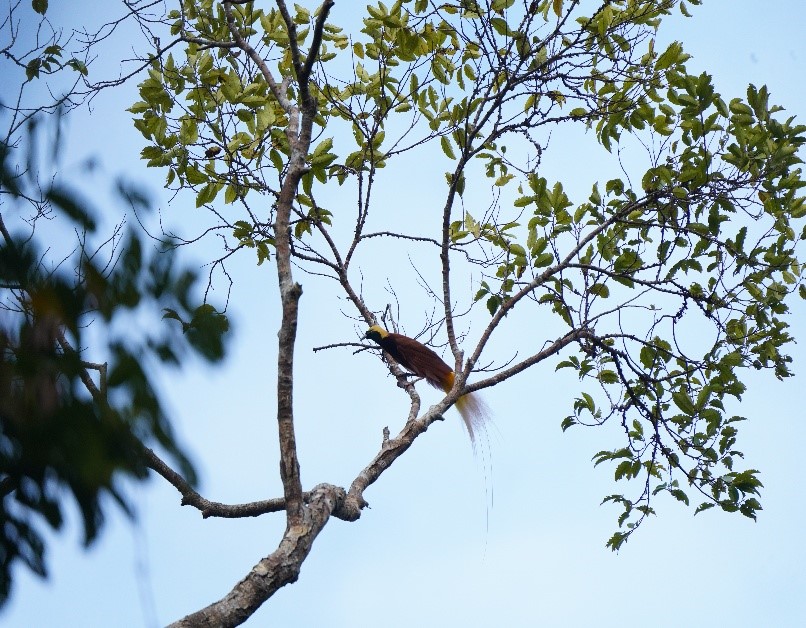
The observed birds of paradise perched on tree branches

The Greater Bird-of-Paradise is well known for its beautiful plumage and mesmerizing mating dance. However, behind this beauty lies a serious threat. For this species, beauty can become a curse. Its population is increasingly pressured by three main threats: poaching, habitation loss, and the impacts of climate change. If these challenges are not addressed immediately, this iconic bird of Papua could lose its natural habitat.

Poaching: The Threat behind the Beauty of Bird-of-Paradise

One of the greatest threats to the great golden bird-of-paradise is illegal hunting. The male’s golden feathers make it a prime target, despite the species is legally protected under Indonesian law. Unfortunately, poaching still occurs in several parts of Papua, especially during the mating season between May and August.

According to BirdLife International (2016), the Greater Bird-of-Paradise is still classified as Least Concern on the IUCN Red List. While this status may appear reassuring, populations in the wild continue to decline due to hunting pressure. This decline could have serious consequences, as male birds play an important role in lekking—a mating display that determines whether or not a new generation will be born.
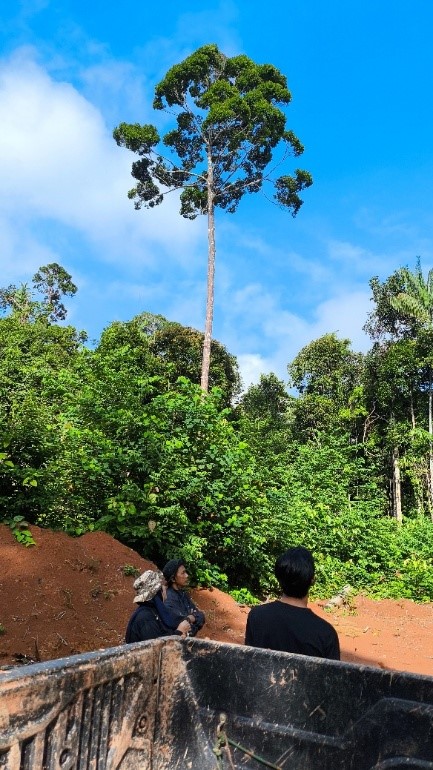
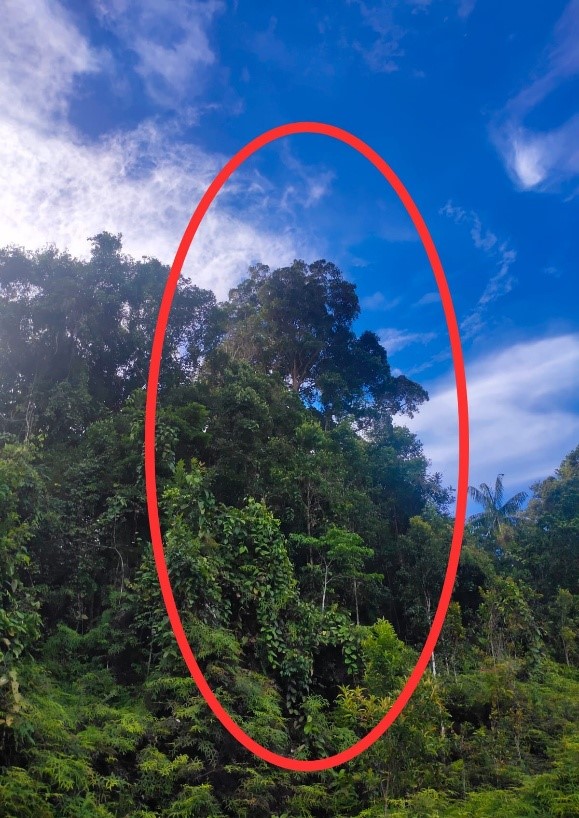
The remaining emergent trees became lekking sites

Shrinking Habitat Destroyed, a Dance under Threat

In addition to hunting, habitat loss poses another serious threat to the Greater Bird-of-Paradise. Papua’s primary forests are steadily shrinking due to development and land-use conversion. The tall trees that were once served as main stages for mating dances are now increasingly scarce, causing these birds of paradise to lose their best breeding grounds.

The consequences extend beyond disrupted mating rituals. Forest fragmentation separates populations, increasing the risk of reduced genetic diversity. Moreover, reduced forest cover means fewer food trees to support the life of these birds of paradise, further threatening its survival.

The Silent Threat of Climate Change

Climate change presents a less visible but equally significant threat. Shifts in the rainy and dry seasons have disrupted their mating schedule. As a result, the breeding season often no longer coincides with the abundance of food, making it difficult for chicks to find food.

Rising temperatures, unpredictable rainfall, and more frequent storms alter are also reshaping Papua’s forests ecosystems. If this continues, the birds may lose not only their dancing grounds, but also their long-term future in the wild.

Collective Action for Forests and Birds-of-Paradise

Protecting the Greater Bird-of-Paradise requires more than regulations on paper. The key lies in the involvement of many parties—from local communities to forest managers. Conservation education, bird-based ecotourism initiatives, and continues field research to monitor populations must all work together. Preserving the trees where these birds perform their courtship dances means safeguarding Papua’s forests and the life within them. As long as the birds-of-paradise continue to dance among the treetops, the balance of nature remains intact.

Love Dance in the Papuan Forest: The Mating Ritual of the Greater Bird of Paradise

The Great Bird of Paradise (Paradisaea apoda) captivates not only with its stunning plumage but also through its enchanting and unique courtship ritual. In Papua’s tropical forests, the males perform spectacular lek dances—more than just a biological process, these displays are a “natural performance” that showcase the wonders of evolution and the power of sexual selection.

A Majestic Dance in the Dry Season

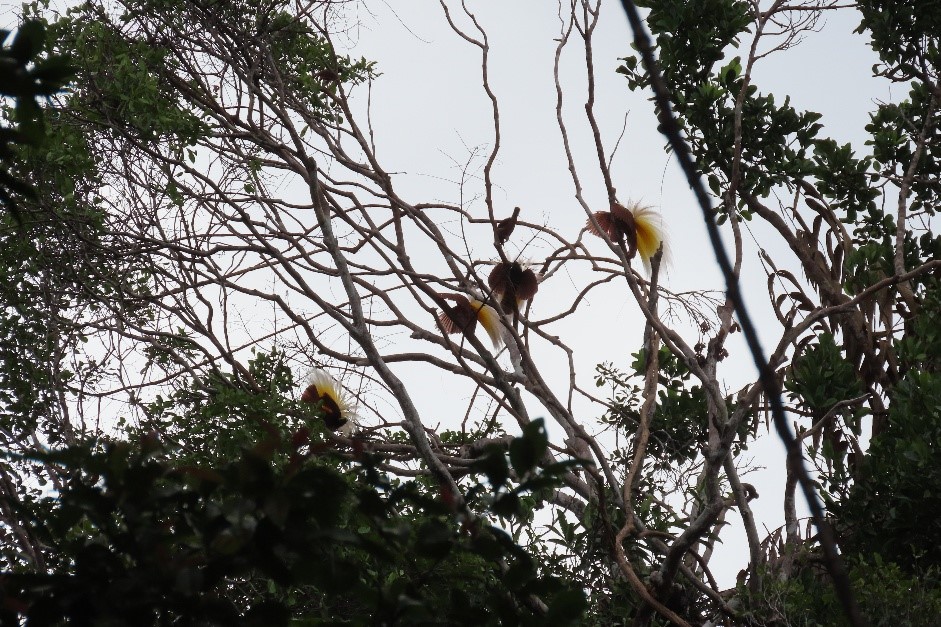
From June and October, during the dry season, lekking activity among Greater Birds-of-Paradise reaches its peak. Every morning before the sun shines brightly, the males choose the tallest trees as their “performance stage.” There, they perform with distinctive movements, spreading and fluttering their long, golden plumes in a dazzling display. Along with their dance, the males call out in loud, distinctive songs that echo through the forest – drawing females while asserting dominance to rival males. Fascinatingly, several males gather at a single lekkking area, turning the forest into a grand arena of competition.

The Female, the True Judge in the Lekking Arena

Female greater birds-of-paradise are highly selective in choosing their mates. They do not simply accept every male that shows off at the lek site. From a distance, the female carefully observes each male’s dance, posture, and shimmering plumage – just like a judge evaluating “best performance.” This courtship can take time, stretching over days or even weeks. Only males with the most captivating dance, well-proportioned bodies, and immaculate, shining feathers stand a chance of being chosen.

Four male great greater birds-of-paradise perch together, each performing their signature dance to attract a mate.

Once she is captivated, the female approaches with calm movements or gives a soft call as a signal of acceptance. Mating is brief, taking place only once in a single encounter. Soon after, the female departs to build her nest and raise the young birds entirely on her own—a striking portrait of independence.

The Fierce Competition in the Lekking Arena

Interestingly, in a single mating season, only a few males actually succeed in finding a mate, while most return home empty-handed. This shows just how intense the competition is in the lekking arena—only males with the finest appearance and the most captivating dances win the female’s heart. The unsuccessful males, however, do not give up. They return to try again in the next season, or even move to another lekking area to seek new opportunities.

A Clever Reproductive Strategy of the Greater Bird-of-Paradise

Research by IPB and TSE Group in 2022 revealed a unique pattern in the mating behavior of the Greater Bird-of-Paradise. Instead of coinciding with the peak of the fruit season, mating actually occurs earlier. This strategy is remarkably clever: by the time the chicks hatch and need abundant food, the fruit trees are already bearing heavily. This natural synchronization ensures the young birds receive sufficient nourishment from the very beginning of their lives, while also illustrating how evolution has shaped a delicate balance between animal behavior and the availability of natural resources.

Why is the Greater Bird of Paradise Found Only in the Forests of Papua?

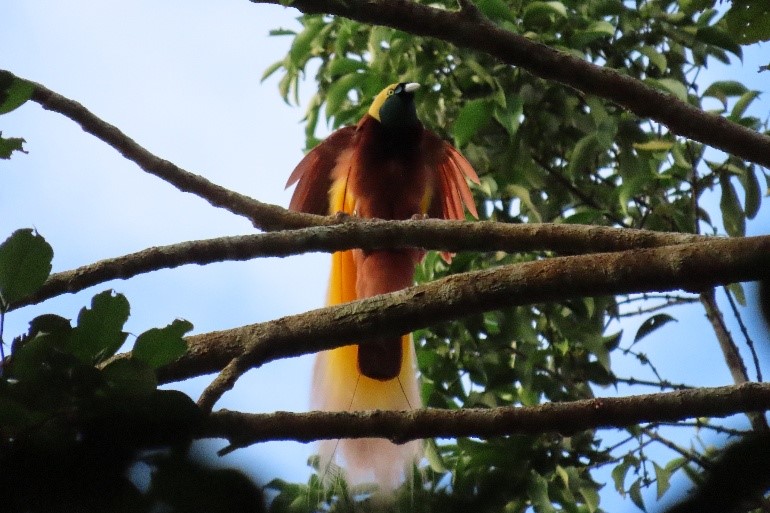
The Greater Bird of Paradise captured on camera in the Asiki Forest, South Papua.

The Greater Bird of Paradise (Paradisaea apoda), is one of Papua’s most iconic treasures. With its dazzling plumage and mesmerizing mating dance, it has earned the nickname “the bird of paradise.” But this species is not only visually attractive, it also plays an important role in the forest ecosystem. What makes it even more fascinating is that the Greater Bird of Paradise exists naturally only in the southern forests of Papua and the surrounding islands.

What secrets make the forests of Papua the only natural home for this magnificent bird? Let’s take a closer look at what makes its habitat so unique.

Humid and Stable Tropical Rainforests

The Greater Bird of Paradise makes its home in the lowland tropical rainforests of Papua. These evergreen forests, stay warm and humid almost all year round, with rainfall ranging from 2,500 to over 5,000 millimeters annually. It’s a landscape that never really dries out – a  perfect paradise where they can feed on fruits, perch high on brances, and perform their dazzling mating dances.

The Asiki Forest, in particular, is like a dream home for the Greater Bird of Paradise. Temperatures stay pleasantly at around 25–26°C throughout the year. In addition, it rains throughout the year in this region—with an average of 3,395 mm per year. The high humidity keeps the forest feel cool and moist, providing ideal conditions for plants to thrive and produce the fruits these birds depend on.

This unique mix of steady climate, abundant rainfall, and high humidity creates a truly supportive ecosystem which perfectly in balance. For the Great Bird of paradise, such stability is crucial, especially since their iconic lekking dance displays rely on the delicate harmony of their forest habitat.


Dense Forest Canopy Cover

For the Greater Bird of Paradise, the forest is both a home and a stage. Its dense, towering canopy offers everything they need – from resting perches and safe nesting spots to a lush green arena for shelter. High among the branches, the males perform their energetic dances, flaunting their shimmering golden feathers to captivate the females.
Research in the Asiki Forest shows that the Great Bird of Paradise’s habitat has an average canopy height of 24.5 meters. Imagine the forest as a multi-story building with four main layers: upper canopy, middle canopy, shrub layer, and ground cover. The tree density here is also remarkably high, exceeding 70%. Together, these conditions create a shady and humid environment, an ideal habitat that sustains the life of The Greater Bird of Paradise.

Far from Human Activity

A lekking tree located far from human activity

The Greater Bird of Paradise are extremely sensitive to disturbances—even the sound of footsteps or a soft conversation can cause them stop dancing. Quiet, undisturbed spaces in the Papua’s forests are essential for their survival. Spatial analysis shows that their habitats are, on average, located quite far from human activity: about 2.2 km from road networks, 2 km from oil palm plantations, and 800 meters from developed land. This confirms the fact that the farther they are from human activity, the greater their chance of survival.

Fortunately, most of Papua’s forests remain protected and far from development. These untouched areas serve as the main stage for birds to dance, forage, and breed without interference. The lush, silent forests provide a safe haven for them to perform their spectacular lekking dances and continue their life cycle. Conservation efforts through careful area management are crucial to ensuring that these birds can keep dancing freely in Papua’s forests.

The Great Yellow Bird-of-Paradise, Papua’s Living Gem with Its Enchanting Dance

Papua’s forests are among the most biodiverse on Earth, and home to one of the most mesmerizing bird species—the Great Yellow Bird-of-Paradise (Paradisaea apoda). Part of the famed Paradiseaeidae family, this bird is known worldwide for its beauty.

Beauty that puts it at Risk

With shimmering yellow-golden feathers that shine when exposed to sunlight, the Great Yellow Bird-of-Paradise looks almost ethereal, making it look like a creature from another world. No wonder it has earned the nickname “the dancer of paradise.” Endemic to Papua, it is a living treasure found nowhere else on the planet.

But this beauty has come at a cost. For centuries, its feathers have been hunted for ornaments and illegal trade. Deforestation further threatens its survival, shrinking the forests it depends on. Losing this bird would mean more than the loss of one species, as it disrupts the balance of the entire ecosystem.

A Closer Look

Since 2022, researchers from IPB University and TSE Group have been studying the Great Yellow Bird-of-Paradise. Their work has included mapping habitats, counting populations, and documenting the species’ unique courtship ritual—the lekking dance.

What the Research Found

The findings have been both fascinating and hopeful. In the concession forest managed by PT Inocin Abadi, 27 individuals were recorded—10 males with striking plumage and 17 females who faithfully watched their dances. Meanwhile, in the PT Tunas Timber Lestari area, 15 females were documented.

Syzygium sp. Tree as the Lek Site of the Greater Bird-of-paradise

Researchers also found several lek trees—special tall trees where males perform their “dance show” to attract females. In PT Inocin Abadi’s concession area, two lek trees were found, while in PT Tunas Timber Lestari’s area there were six lek trees. These trees are not just any trees, they are often jambuan, matoa, kelat, or medang which are not necessarily the thickest (around 33–70 cm), but they tower above the other trees, surrounding canopy, making them the perfect stage.

From this height, male birds can more easily spread their golden wings, display their dances, and call loudly to attract mates with loud voices. The lek season usually runs from July to September, peaking in August. During this time, the forests transforms into a breathtaking natural stage. The males dance, jump, and flap their golden wings, while the females carefully select the best mates. Papua’s forest theater at its finest.


A Sign of a Healthy Forest

If birds of paradise are still dancing in an area, it means that the forest is alive and thriving. Tall trees remain standing, the food chain stays intact, and the forest’s microclimate holds steady. Their disappearance, on the other hand, is a sign of greater damage to ecological breakdown.

Safeguarding the Great Yellow Bird-of-Paradise means preserving Papua’s forest as a whole. The tall trees where they dance, the wildlife that shares the habitat, and the very soil they all depend on are deeply interconnected. Conservation efforts cannot stand alone, it requires seeing the forest as a living entity.

Through collaboration—combining science, conservation, and local communities—this iconic bird can continue its golden dances high above the Papuan canopy. More than just a “wonder of nature”, it is a symbol of hope for forest conservation and future generations.

Researching Biodiversity from Eastern Indonesia

National palm oil company Tunas Sawa Erma (TSE) Group is building a research vessel called Papua Lestari. Photo: TSE doc.

Papua: Indonesia palm oil company Tunas Sawa Erma (TSE) Group is building a research vessel called “Papua Lestari” to find out about the life of the pig-nosed turtle and the river ecosystem of its habitat in South Papua.

The vessel can accommodate five people to do activities inside. The vessel not only provides space for research equipment but also equips researchers with various facilities to simplify their work.

This vessel is an important facility to conduct research on aquatic biota in Papua, especially the pig-nosed turtle. We hope that “Papua Lestari” will enhance the quality of research by enabling researchers to carry out their activities more effectively.

The research vessel “Papua Lestari” is actually a facility provided by the TSE Group, not only as a means of transportation for researchers but also as a symbol to spread the message of conservation.

Environmental conservation

“We built Papua Lestari to research the ecosystem in rivers and swamps in Papua, including pig-nosed turtles, fish, snakes, and so on.” In addition, this research vessel can also be a symbol to open people’s eyes to the importance of environmental conservation,” said TSE Group Director Luwy Leunufna in a written statement, Tuesday, April 29, 2025.

The completion of this ship is part of the Papua Conservation Program commitment launched by TSE Group and IPB University in 2022. This programme aims to protect the right to life and increase public awareness of endemic animals.

This programme not only focuses on conservation for pig-nosed turtles but also other endemic Papuan animals, namely the large yellow bird of paradise in Merauke and Boven Digoel Regencies, South Papua.

.

Source: www.metrotvnews.com

TSE Group Shows Support for Pig-Nosed Turtle Conservation in Boven Digoel

Tunas Sawa Erma (TSE) Group and its stakeholders take part in the release of pig-nosed turtle hatchlings at Kao River, Kalikao Subvillage in Jair District, Boven Digoel Regency.

CEPOSONLINE.COM, BOVEN DIGOEL- Tunas Sawa Erma (TSE) Group, a South Papua-based oil palm plantation and management company, took part in the release of pig-nosed turtle hatchlings at Kao River, Kalikao Subvillage in Jair District, Boven Digoel Regency Friday (01/10).

This event is part of conservation efforts run by Kinggo Kambenap, a local community dedicated to preserving nearby habitats since 2007.

Attending stakeholders included government representatives, local police leaders, private sector officials, academicians, and Kinggo Kambenap members themselves. Together, they allowed the “tukik birip” — the hatchlings’ local name — to crawl into Kao River. In the past months, Kinggo Kambenap had been busy collecting and looking after pig-nosed turtle eggs until they’re ready to hatch and roam into the wild. The goal? Protecting the habitat of Kao River’s endemic populations — where these turtles are a part of — for future generations.

“We strongly support Kinggo Kambenap’s preservation efforts, which [we think] are consistent with our promise to safeguard natural environments and champion habitat conservation programs organized by local communities,” said TSE Group representative Bani Susilo Djokroadji.

The firm itself has been involved in the care of Carrettochelys insculpta (the Latin name for pig-nosed turtles) in Boven Digoel’s Kao and Muyu Rivers in partnership with IPB University.

Its role is to provide all the researchers’ needs to properly study the freshwater species.

This project and Kinggo Kambenap’s work are hoped to stabilize population numbers and maintain the living environment for the turtles and, in turn, other rare species.

Onwards, TSE Group will continue supporting the initiative and environmental programs in general. (*)


Source: www.ceposonline.com

An Indigenous community in Papua New Guinea protects rare turtles

Yolarnie Amepou is the Director of the Piku Biodiversity Network. When she started teaching children in Kikori, located in the Gulf Province of Papua New Guinea, to stop hunting for highly threatened pig-nosed turtles, some parents were not too happy.

“One child told her mother, ‘Let me take the turtle to Larnie to measure it.’ And somewhere between her home and Larnie’s house, their dinner went missing,” Amepou chuckled.

Thanks to Amepou’s efforts with the Piku Biodiversity Network, the survival rate of baby turtles in Papua New Guinea has increased. Since 2012, the organization has been teaching the local Kikori Indigenous group, especially school children, to protect this important species while conducting conservation research with them.

Yolarnie Amepou demonstrates how to prepare a safety tub to incubate pig-nosed eggs as Obiri, a Turtle Ranger, observes so he can assist the Turtle Rangers replicate 19 more tubs. The eggs are moved from natural sandbanks and kept safely in these tubs awaiting hatching. Image credit: Courtesy of Piku Biodiversity Network

Pig-nosed turtles, Carettochelys insculpta, are endemic to northern Australia and Papua New Guinea. Also known as the Piku turtle, it plays a significant role in Papua New Guinean culture, even represented on the country’s 5t coin. But even this didn’t stop the Piku’s population decline. Due to human activity, they are now endangered. In Australia, destruction is their main threat, while in Papua New Guinea, it’s poaching.

The female Piku turtle is targeted the most. Not only do female turtles nest in groups, but when one starts to lay eggs, she goes into a trance and becomes oblivious to her surroundings. That is when she is most vulnerable to human predators. In 2011, scientists from the University of Canberra, Australia, identified that the Piku population had fallen by 57% in the last 30 years.

Kikori Turtle Rangers locating nests and relocating them to safety tubs. Image credit: Courtesy of Joyce Mavere, Kikori Turtle Rangers

There is also illegal trade. More than 80,000 pig-nosed turtles were confiscated by authorities between 2003 and 2013 in Papua New Guinea and Indonesia. Because of this, Amepou started an educational campaign in the Kikori Delta, one of the main nesting sites for these turtles. Her approach consists of giving knowledge to the local community about the importance of pig-nosed turtles and providing them with an alternative source of livelihood.

Kikori Turtle Rangers

The organization and community established a project called “We Are the Kikori Turtle Rangers.” The rangers participate in turtle monitoring, incubation, and hatching, as well as education programs. Some of the rangers have been a part of this journey since they were children

Yolarnie Amepou with elementary students at Kikori for hatching activities. Image credit: Courtesy of Piku Biodiversity Network

“[Out of] all these rangers, ten of them have been part of the Piku activities in the past when they were in school. One of them was in Grade 4 when I first started coming here. Now, he is a grown man, with a family of his own. After all these years, you start to realize it’s not necessarily about the turtles, but about community empowerment, building a community to manage and take ownership of their resources. It then benefits the turtles,” Amepou says.

Amepou hopes to expand, working with more and more Kikori individuals promoting what a ranger does and can do in their community. However, one of the biggest challenges she faces is difficulty in coordinating the initiative. Seven different tribes live in the project area, each with their own distinct language. There is also a lack of funding which prevents many rangers from earning an income.

Optimistic, Amepou hopes one day she will be able to pay all the rangers and give the local community an opportunity for more jobs, while also participating in conservation. She wants to inspire the youth to lead. “The young people are already showing leadership and are having great influence within their communities,” said Amepou.

Source: www.oneearth.org

Kura – Kura Moncong Babi di Selatan Papua

Petugas Unit Pelaksanaan Teknis Balai Besar Karantina Ikan memperlihatkan barang bukti penyelundupan kura-kura Moncong Babi asal Papua saat menggelar barang bukti dan konfrensi pers Penggalan Pengeluaran Ekspor Komoditi Kura-Kura Moncong Babi, Lobster dan Kepiting Bertelur di Kementerian Kelautan Dan Perikanan, Gambir, Jakarta,Senin (19/1/2015). (ANTARA FOTO/Teresia May)

Jayapura (ANTARA News) – Dinas Kehutanan Provinsi Papua menyatakan populasi terbesar habitat asli kura-kura moncong babi tersebar di bagian selatan “Bumi Cenderawasih” itu, yaitu Kabupaten Asmat, Mappi, dan Merauke.

Kepala Dinas Kehutanan Provinsi Papua Jan Jap Ormuseray di Jayapura, Jumat, mengatakan satwa langka yang dilindungi tersebut belakangan sering diselundupkan, mengingat tingginya permintaan pasar luar negeri.

“Untuk itu, kami terus mendorong kura-kura moncong babi ini agar menjadi satwa buru dalam peraturan menteri yang kini tengah dibahas regulasinya,” katanya.

Jan menjelaskan dengan diterbitkannya peraturan menteri mengenai satwa buru di mana kura-kura moncong babi masuk di dalamnya, maka hewan ini dapat diternakan dan dikembangbiakan untuk kemudian dikomersialkan.

“Dengan ditetapkan sebagai satwa buru, maka kami dapat mempelopori dibentuknya kelompok atau koperasi masyarakat adat untuk memanfaatkan kura-kura moncong baik agar memberikan pendapatan secara legal,” ujarnya.

Dia menuturkan selain dapat memberikan pemasukan dan menyejahterakan masyarakat, bisa juga meningkatkan pendapatan asli daerah di tempat habitat aslinya.

“Hal ini juga dapat mengurangi kasus-kasus penyelundupan kura-kura moncong babi ke luar dari Papua seperti yang terjadi di awal 2016, di mana pihak Bandara Moses Kilangin Timika bersama instansi terkait berhasil menggagalkan upaya pengirimannya secara ilegal,” katanya.

Meskipun upaya penyelundupan 6.967 ekor kura-kura moncong babi berhasil digagalkan dan akhirnya dikembalikan lagi ke habitat aslinya di Kabupaten Asmat, katanya, hal itu harus menjadi perhatian khusus agar tidak terulang lagi pada masa mendatang.

Sumber: www.antaranews.com

Kura-Kura Moncong Babi, Hewan Endemik Papua yang Banyak Diburu untuk Dijual ke Luar Negeri

Kura-kura moncong babi, hewan endemik Papua yang terancam punah karena banyak diselundupkan ke luar negeri. (Foto : Reptil Indonesia)

JAKARTA, iNews.id – Labi-labi moncong babi (Carettochelys insculpta) merupakan ikan dengan jenis kura-kura berpunggung (cangkang) lunak, anggota suku Trionychidae. Hewan reptil ini sering juga disebut dengan nama kura-kura.

Kura-kura moncong babi merupakan hewan endemik Papua yang populasinya di alam bebas sangat terancam. Selain diburu untuk dikonsumsi, hewan peliharaan populer ini sering diselundupkan ke luar negeri (Cina dan Taiwan) untuk dikonsumsi sebagai obat.

Secara umum kura-kura moncong babi hidup di sejumlah sungai di daerah bagian selatan Papua. Populasi terbesarnya di Kabupaten Asmat, Mappi dan Merauke.

Kura-kura moncong babi merupakan satwa liar endemik Papua yang dilindungi Undang-Undang berdasarkan Peraturan Menteri Lingkungan Hidup dan Kehutanan Republik Indonesia Nomor P.106/MENLHK/SETJEN/KUM.1/12/2018. Sebagai satwa dilindung, maka penyelundup reptil ini terancam penjara.

Saat ini, Taman Nasional Gunung Lorentz menjadi tempat perlindungan terakhirnya. Sebab satwa langka tersebut belakangan sering diselundupkan, mengingat tingginya permintaan pasar luar negeri.

Karakteristik kura-kura moncong babi

Kura-kura moncong babi tidak seperti spesies kura-kura air tawar lainnya yang memiliki kaki sebagai alat gerak. Pada reptil ini, kaki labi-labi berfungsi sebagai sirip, menyerupai penyu.

Hidungnya terlihat seperti babi yang memiliki lubang hidung di ujung moncong berdaging. Inilah mengapa namanya disebut kura kura hidung babi (pig-nosed turtle).

Tempurungnya biasanya berwarna abu-abu dengan tekstur kasar. Sementara plastron berwarna krem. Untuk membedakan jantan dan betina dapat dilihat dari bentuk ekornya yang lebih panjang dan lebih sempit. Kura-kura moncong babi bisa tumbuh hingga sekitar 70 cm dengan berat lebih dari 20 kg.

Satwa ini merupakan jenis omnivora yang berarti memakan tumbuhan dan hewan. Namun kura-kura ini lebih menyukai tanaman dan buah daripada binatang di alam liar.


Sumber: papua.inews.id

Kura-Kura Moncong Babi yang Diamankan BKSDA Sumbar akan dikirim ke Timika Papua

Kura-Kura Moncong Babi Diamankan BKSDA Sumbar akan dikirim ke Timika Papua

Infosumbar.net – Balai Konservasi Sumberdaya Alam (BKSDA) Sumatera Barat telah mengamankan Kura-kura moncong babi (Carettochelys insculpta) dan Kura-kura baning coklat (Manouria emys), satwa tersebut akan dikembalikan ke Timika, Kecamatan Mimika Baru, Kabupaten Mimika. Provinsi Papua, pada Jumat (27/5/2022).

Sebelumnya satwa tersebut sudah diamankan dari seorang terdakwa dengan inisial MIH yang merupakan warga kota Payakumbuh yang diamankan langsung oleh tim Wildlife Rescue unit (WRU) BKSDA Sumbar bekerjasama dengan Ditreskrimsus Polda Sumbar pada tanggal 7 Maret 2022.

Adapun barang bukti yang sudah diamankan diantaranya 472 ekor Kura-kura moncong babi dari Papua serta 6 ekor Kura-kura baning coklat. Kemudian untuk barang bukti 6 ekor baning coklat telah di lepasliarkan di Taman Hutan Raya (Tahura) Bung Hatta yang mana lokasi tersebut berbatasan langsung dengan Suaka Margasatwa Bukit Barisan

Kepala BKSDA Sumbar Ardi Andono mengatakan kasus perdagangan ilegal Kura-kura moncong babi dan Kura-kura baning coklat sudah masuk dalam proses persidangan di Pengadilan Tinggi Negeri Payakumbuh.

Dalam sidang itu para saksi juga meminta kepada hakim untuk memberikan izin agar kura-kura moncong babi yang masih hidup bisa dilepasliarkan untuk kembali ke habitatnya.

“Kita berharap agar dapat dikembalikan ke Papua tepatnya di Timika melalui BKSDA Papua,” kata Ardi Andono.

Ardi Andono juga menjelaskan bahwa pihaknya juga telah melakukan kerjasama Balai Karantina Ikan dan BKSDA Daerah Khusus Ibukota (DKI) Jakarta untuk proses pengurusan transit nantinya di Jakarta.

Ia juga berharap agar penyelesaian kasus tersebut berjalan dengan lancar, dan pelaku mendapatkan vonis maksimal dengan tujuan agar menimbulkan efek jera terhadap penjual dan seluruh jaringannya.

Diketahui sebelumnya pelaku dan satwa yang dilindungi itu sudah diamankan oleh BKSDA Sumatera Barat dengan Ditreskrimsus Polda Sumbar, pelaku dan barang bukti yang didapatkan sudah diamankan pada Senin (7/3/2022) sekitar pukul 22:00 WIB di Kota Payakumbuh, Provinsi Sumatera Barat. (Ism02)

Sumber: www.infosumbar.net

Papua Conservation

Asiki, Jair,
Boven Digoel Regency,
Papua 99661


T: 021-396-7102
E: mail@papuaconservation.com