Love Dance in the Papuan Forest: The Mating Ritual of the Greater Bird of Paradise

The Great Bird of Paradise (Paradisaea apoda) captivates not only with its stunning plumage but also through its enchanting and unique courtship ritual. In Papua’s tropical forests, the males perform spectacular lek dances—more than just a biological process, these displays are a “natural performance” that showcase the wonders of evolution and the power of sexual selection.

A Majestic Dance in the Dry Season

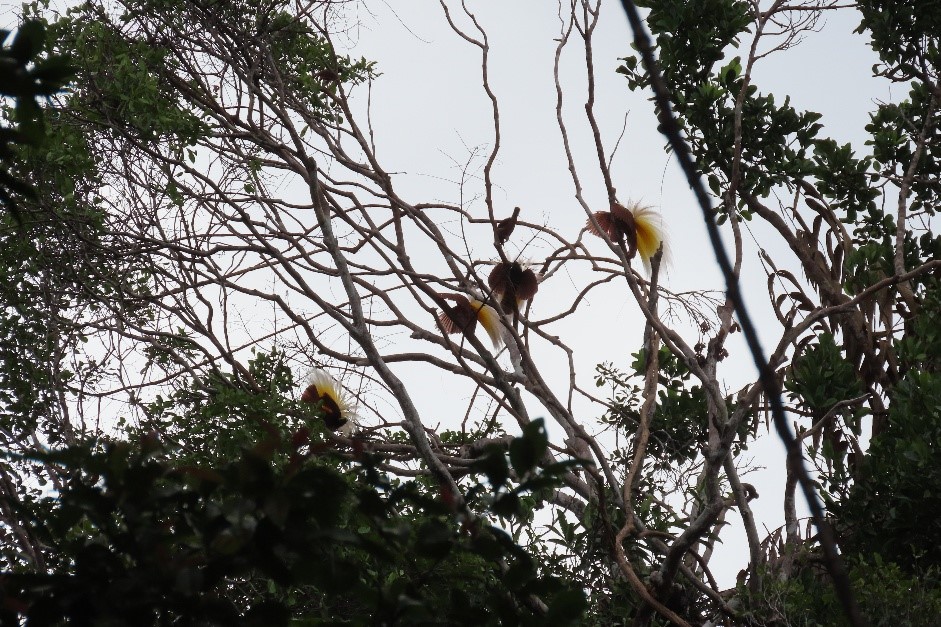
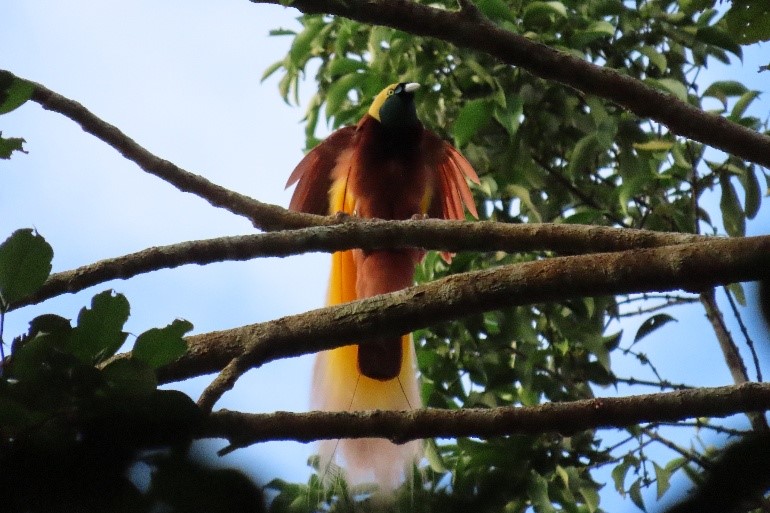
From June and October, during the dry season, lekking activity among Greater Birds-of-Paradise reaches its peak. Every morning before the sun shines brightly, the males choose the tallest trees as their “performance stage.” There, they perform with distinctive movements, spreading and fluttering their long, golden plumes in a dazzling display. Along with their dance, the males call out in loud, distinctive songs that echo through the forest – drawing females while asserting dominance to rival males. Fascinatingly, several males gather at a single lekkking area, turning the forest into a grand arena of competition.

The Female, the True Judge in the Lekking Arena

Female greater birds-of-paradise are highly selective in choosing their mates. They do not simply accept every male that shows off at the lek site. From a distance, the female carefully observes each male’s dance, posture, and shimmering plumage – just like a judge evaluating “best performance.” This courtship can take time, stretching over days or even weeks. Only males with the most captivating dance, well-proportioned bodies, and immaculate, shining feathers stand a chance of being chosen.

Four male great greater birds-of-paradise perch together, each performing their signature dance to attract a mate.

Once she is captivated, the female approaches with calm movements or gives a soft call as a signal of acceptance. Mating is brief, taking place only once in a single encounter. Soon after, the female departs to build her nest and raise the young birds entirely on her own—a striking portrait of independence.

The Fierce Competition in the Lekking Arena

Interestingly, in a single mating season, only a few males actually succeed in finding a mate, while most return home empty-handed. This shows just how intense the competition is in the lekking arena—only males with the finest appearance and the most captivating dances win the female’s heart. The unsuccessful males, however, do not give up. They return to try again in the next season, or even move to another lekking area to seek new opportunities.

A Clever Reproductive Strategy of the Greater Bird-of-Paradise

Research by IPB and TSE Group in 2022 revealed a unique pattern in the mating behavior of the Greater Bird-of-Paradise. Instead of coinciding with the peak of the fruit season, mating actually occurs earlier. This strategy is remarkably clever: by the time the chicks hatch and need abundant food, the fruit trees are already bearing heavily. This natural synchronization ensures the young birds receive sufficient nourishment from the very beginning of their lives, while also illustrating how evolution has shaped a delicate balance between animal behavior and the availability of natural resources.

Why is the Greater Bird of Paradise Found Only in the Forests of Papua?

The Greater Bird of Paradise captured on camera in the Asiki Forest, South Papua.

The Greater Bird of Paradise (Paradisaea apoda), is one of Papua’s most iconic treasures. With its dazzling plumage and mesmerizing mating dance, it has earned the nickname “the bird of paradise.” But this species is not only visually attractive, it also plays an important role in the forest ecosystem. What makes it even more fascinating is that the Greater Bird of Paradise exists naturally only in the southern forests of Papua and the surrounding islands.

What secrets make the forests of Papua the only natural home for this magnificent bird? Let’s take a closer look at what makes its habitat so unique.

Humid and Stable Tropical Rainforests

The Greater Bird of Paradise makes its home in the lowland tropical rainforests of Papua. These evergreen forests, stay warm and humid almost all year round, with rainfall ranging from 2,500 to over 5,000 millimeters annually. It’s a landscape that never really dries out – a  perfect paradise where they can feed on fruits, perch high on brances, and perform their dazzling mating dances.

The Asiki Forest, in particular, is like a dream home for the Greater Bird of Paradise. Temperatures stay pleasantly at around 25–26°C throughout the year. In addition, it rains throughout the year in this region—with an average of 3,395 mm per year. The high humidity keeps the forest feel cool and moist, providing ideal conditions for plants to thrive and produce the fruits these birds depend on.

This unique mix of steady climate, abundant rainfall, and high humidity creates a truly supportive ecosystem which perfectly in balance. For the Great Bird of paradise, such stability is crucial, especially since their iconic lekking dance displays rely on the delicate harmony of their forest habitat.


Dense Forest Canopy Cover

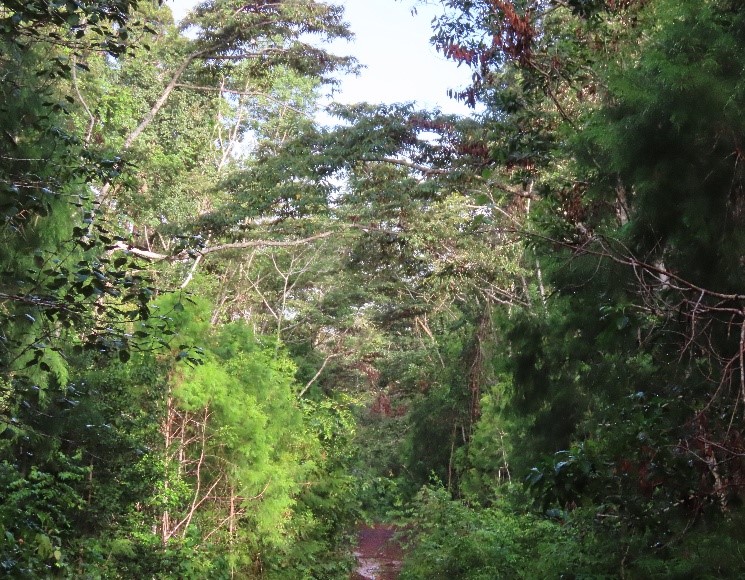
For the Greater Bird of Paradise, the forest is both a home and a stage. Its dense, towering canopy offers everything they need – from resting perches and safe nesting spots to a lush green arena for shelter. High among the branches, the males perform their energetic dances, flaunting their shimmering golden feathers to captivate the females.
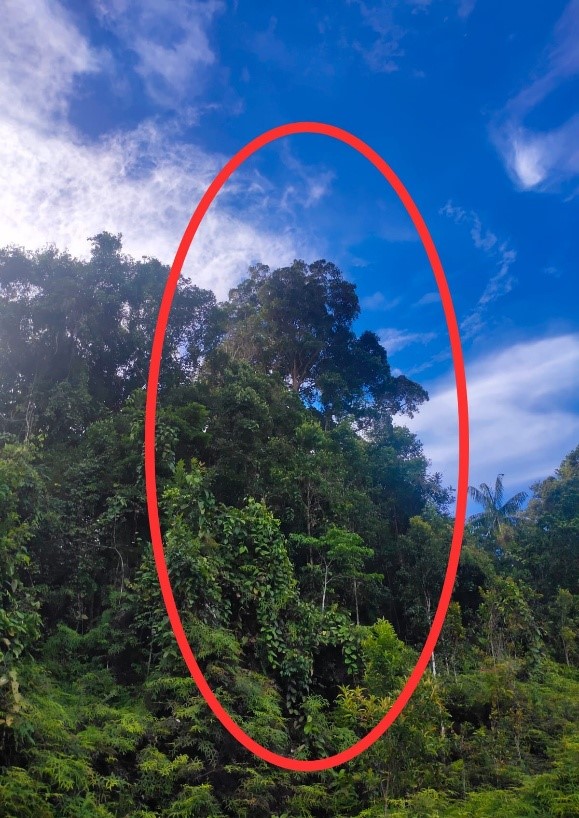
Research in the Asiki Forest shows that the Great Bird of Paradise’s habitat has an average canopy height of 24.5 meters. Imagine the forest as a multi-story building with four main layers: upper canopy, middle canopy, shrub layer, and ground cover. The tree density here is also remarkably high, exceeding 70%. Together, these conditions create a shady and humid environment, an ideal habitat that sustains the life of The Greater Bird of Paradise.

Far from Human Activity

A lekking tree located far from human activity

The Greater Bird of Paradise are extremely sensitive to disturbances—even the sound of footsteps or a soft conversation can cause them stop dancing. Quiet, undisturbed spaces in the Papua’s forests are essential for their survival. Spatial analysis shows that their habitats are, on average, located quite far from human activity: about 2.2 km from road networks, 2 km from oil palm plantations, and 800 meters from developed land. This confirms the fact that the farther they are from human activity, the greater their chance of survival.

Fortunately, most of Papua’s forests remain protected and far from development. These untouched areas serve as the main stage for birds to dance, forage, and breed without interference. The lush, silent forests provide a safe haven for them to perform their spectacular lekking dances and continue their life cycle. Conservation efforts through careful area management are crucial to ensuring that these birds can keep dancing freely in Papua’s forests.

The Great Yellow Bird-of-Paradise, Papua’s Living Gem with Its Enchanting Dance

Papua’s forests are among the most biodiverse on Earth, and home to one of the most mesmerizing bird species—the Great Yellow Bird-of-Paradise (Paradisaea apoda). Part of the famed Paradiseaeidae family, this bird is known worldwide for its beauty.

Beauty that puts it at Risk

With shimmering yellow-golden feathers that shine when exposed to sunlight, the Great Yellow Bird-of-Paradise looks almost ethereal, making it look like a creature from another world. No wonder it has earned the nickname “the dancer of paradise.” Endemic to Papua, it is a living treasure found nowhere else on the planet.

But this beauty has come at a cost. For centuries, its feathers have been hunted for ornaments and illegal trade. Deforestation further threatens its survival, shrinking the forests it depends on. Losing this bird would mean more than the loss of one species, as it disrupts the balance of the entire ecosystem.

A Closer Look

Since 2022, researchers from IPB University and TSE Group have been studying the Great Yellow Bird-of-Paradise. Their work has included mapping habitats, counting populations, and documenting the species’ unique courtship ritual—the lekking dance.

What the Research Found

The findings have been both fascinating and hopeful. In the concession forest managed by PT Inocin Abadi, 27 individuals were recorded—10 males with striking plumage and 17 females who faithfully watched their dances. Meanwhile, in the PT Tunas Timber Lestari area, 15 females were documented.

Syzygium sp. Tree as the Lek Site of the Greater Bird-of-paradise

Researchers also found several lek trees—special tall trees where males perform their “dance show” to attract females. In PT Inocin Abadi’s concession area, two lek trees were found, while in PT Tunas Timber Lestari’s area there were six lek trees. These trees are not just any trees, they are often jambuan, matoa, kelat, or medang which are not necessarily the thickest (around 33–70 cm), but they tower above the other trees, surrounding canopy, making them the perfect stage.

From this height, male birds can more easily spread their golden wings, display their dances, and call loudly to attract mates with loud voices. The lek season usually runs from July to September, peaking in August. During this time, the forests transforms into a breathtaking natural stage. The males dance, jump, and flap their golden wings, while the females carefully select the best mates. Papua’s forest theater at its finest.


A Sign of a Healthy Forest

If birds of paradise are still dancing in an area, it means that the forest is alive and thriving. Tall trees remain standing, the food chain stays intact, and the forest’s microclimate holds steady. Their disappearance, on the other hand, is a sign of greater damage to ecological breakdown.

Safeguarding the Great Yellow Bird-of-Paradise means preserving Papua’s forest as a whole. The tall trees where they dance, the wildlife that shares the habitat, and the very soil they all depend on are deeply interconnected. Conservation efforts cannot stand alone, it requires seeing the forest as a living entity.

Through collaboration—combining science, conservation, and local communities—this iconic bird can continue its golden dances high above the Papuan canopy. More than just a “wonder of nature”, it is a symbol of hope for forest conservation and future generations.

Pioneering Historian of Science and Explorer of the Greater Bird of Paradise

Alfred Russel Wallace

A Pioneer of Natural Selection and Biogeography

Alfred Russel Wallace, often overshadowed by Charles Darwin, was a groundbreaking scientist whose work shaped our understanding of evolution and biodiversity. Here’s a concise look at his key contributions:

In 1858, while in the Malay Archipelago, Wallace sent Charles Darwin a paper outlining his theory of evolution by natural selection. This prompted the joint publication of the “Wallace-Darwin Letters,” introducing the world to the concept. Wallace’s independent discovery highlighted the importance of ecology in understanding evolution.

In 1859, Wallace proposed the “Wallace Line,” an imaginary line separating the distinct faunal regions of Southeast Asia and Australia. Running through the Malay Archipelago, between Borneo and Sulawesi, and between Bali (in the west) and Lombok (in the east). It revealed how geography influences species distribution. This concept became a cornerstone of biogeography, showcasing the unique biodiversity of the region.

Illustration of wallacea line map from rimbakita.com

Wallace’s eight-year exploration of the Malay Archipelago culminated in his 1869 book, The Malay Archipelago: The Land of the Orangutan and the Bird of Paradise. He documented the relationship between species and their environments, offering early insights into how ecology shapes evolution. His work also hinted at ancient, submerged landmasses, linking species distribution to Earth’s geological history.

Unveiling the Secrets of the Bird of Paradise: Wallace’s Legacy in Conservation

Alfred Russel Wallace, the pioneering naturalist whose explorations in The Malay Archipelago unveiled the wonders of Southeast Asia’s biodiversity. From the lush forests of Borneo to the remote islands of New Guinea, Wallace’s work not only advanced natural science but also shed light on the urgent need for conservation—especially for the iconic bird of paradise.

The Myth of the Bird of Paradise

In the 18th and 19th centuries, the bird of paradise captivated European imagination. Its dazzling feathers symbolized luxury, wealth, and status, adorning hats, dresses, and formal wear. Yet, Wallace revealed a stark truth: Europe’s fascination was built on myths and misconceptions.

Through his travels (Malaya, Nicobar Island, Philippines, Solomon Island, out of New Guinea), Wallace introduced the world to the bird’s true habitat—its native forests in Papua and the Aru Islands. He debunked the romanticized tales of the bird floating in eternal flight, emphasizing its ecological role and the need to protect its fragile existence.

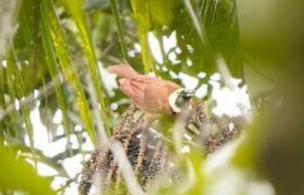
Greater Bird of Paradise perches on a tree branch.

The Dark Side of the Feather Trade

Wallace’s observations exposed the devastating impact of the wild bird trade. European demand for feathers drove uncontrolled exploitation, with local hunters overharvesting the birds to meet foreign markets. Wallace noted the lack of regulations and the toll this took on the bird’s populations.

He highlighted the irony: while Europeans marveled at the bird’s beauty, they knew little about its life in the wild. The bird of paradise became a symbol of luxury, but at the cost of its survival.


Wallace’s Call for Conservation

Wallace’s work was more than scientific discovery—it was a call to action. He documented the ecological importance of the bird of paradise and warned against the dangers of unchecked exploitation. His insights laid the groundwork for modern conservation efforts, reminding us of the delicate balance between human desires and nature’s needs.

Today, Wallace’s legacy lives on as we strive to protect the bird of paradise and its habitat. His journey through The Malay Archipelago not only refuted myths but also inspired a deeper understanding of our natural world.

The Pig-Nosed Turtle: Balancing Tradition and Conservation in Papua

Have you ever heard of the pig-nosed turtle (Carettochelys insculpta)? This unique species, with its distinctive pig-like snout and flipper-like limbs, is one of nature’s most intriguing creations. Found in the freshwater rivers and estuaries of northern Australia and southern New Guinea, this turtle is not only a marvel of evolution but also a symbol of the delicate balance between human activity and wildlife conservation.

Snout and limbs Pig-nosed turtle

Endangered Species

The pig-nosed turtle is the only living member of its family, Carettochelyidae, making it a true evolutionary oddity and also listed as an Endangered species by the IUCN.  But there is someone who is threatening the survival of this endangered species by collecting eggs from its nest: local communities.

Every year, female pig-nosed turtles emerge onto sandy riverbanks to lay their eggs. These nesting sites are often located on customary lands in Southern Papua, where indigenous communities have harvested turtle eggs for generations. For these communities, the eggs are a valuable resource, providing both food and income.

In regions like the Kao River, the collection of pig-nosed turtle eggs is a well-established tradition. Local residents, often from clans that hold customary rights to the land, are the primary harvesters. These individuals are not only skilled hunters but also experts in locating turtle nests hidden beneath the sand. Using generations of knowledge, they carefully dig up the eggs, ensuring that none are damaged in the process.

The white color of the shell indicates that the pig-nosed turtle eggs have been buried for several days due to the tides in the Kao River.

The Challenge of Sustainable Harvesting

Based on Papua Conservation Program team’s field survey and interview, In regions like the Kao River, it’s estimated that up to 69,000 pig-nosed turtle eggs are harvested each nesting season. Harvesters, collect every egg from the nests they find. While the primary focus is on the eggs, some adult turtles are also taken for personal consumption.

The position of the nest was discovered using an iron rod and pig-nosed turtle eggs taken from the nest.

Interestingly, the sale of pig-nosed turtles is not in the form of eggs but as hatchlings. This means that harvesters must incubate the eggs themselves, either at makeshift camps or in their villages. While this practice ensures a steady supply of hatchlings for the market, it also highlights the need for sustainable harvesting practices that prioritize conservation.

The Indonesian government had declared the pig-nosed turtle a protected species and recommended a national harvest quota of 10,000 in the form of eggs, with harvesting sites in Mimika and Asmat.

Only one company has been granted a permit to collect eggs from nature and incubate the eggs. There is a clear imbalance between the quota and the number of eggs collected by local people.

A Balancing Act: Tradition and Conservation

The pig-nosed turtle faces a unique challenge. On one hand, its eggs are an important resource for local communities, deeply tied to their cultural and economic practices. On the other hand, unchecked harvesting could threaten the species’ survival. So, how do we strike a balance?

A mechanism is needed to allow the community to engage in legal harvesting without compromising economic gain and conservation benefits. We also need to improve awareness. If communities can understand the value of this species in the ecosystem and the sense of stewardship, it may be possible to release half of the hatchlings back into the wild.

Final Thoughts

The pig-nosed turtle’s story is a reminder of the complex relationship between humans and nature. It challenges us to find ways to coexist with wildlife, respecting traditional practices while ensuring the survival of vulnerable species.

Factors for Habitat Loss of Pig Nosed Turtle in South Papua

According to Indonesia’s Minister of Environment and Forestry Regulation No. P.106/MENLHK/SETJEN/KUM.1/12/2018, the Pig-nosed Turtle (Carettochelys insculpta) has been designated as a protected species in Indonesia and is listed under Appendix II of CITES (Convention on International Trade in Endangered Species of Wild Fauna and Flora). Despite this protection, cases of illegal wildlife trade, consumption, and use in traditional medicine and cosmetics continue to be reported.

Intensive habitat exploitation still occurs in Papua, with 20 cases recorded between 2013 and 2020, along with one additional case in 2022. Below are examples of illegal trade evidence collected by authorities:

No Date Type Total Perpetrator Security Found Location
1 07-Mar-22 Carretochelys Insculpta 472 tails MIH Wildlife Rescue Unit (WRU) BKSDA Payakumbuh City

(Source:  https://ppid.menlhk.go.id/berita/siaran-pers/6513/penyerahan-tahap-2-kasus-perdagangan-kura-kura-moncong-babi-carettochelys-insculpta).

Criminal sanctions for perpetrators of illegal wildlife stated on Article 21, Paragraph 2, Letter d, in conjunction with Article 40, Paragraph 2 of Law Number 5 of 1990 on the Conservation of Living Natural Resources and Their Ecosystems.

No Date Type Total Perpetrator Security Found Location
1 19- Jan-19


Carretochelys Insculpta 1.190 tails Merauke Distric Court Mopah Airport in Merauke

(Source: https://www.wwf.id/id/blog/kura-kura-moncong-babi-go-international)

Based on this case, the Merauke District Court sentenced the defendant to four months in prison and imposed a fine of Rp. 5.000.000. If the fine is not paid, the defendant will serve an additional two months’ of imprisonment.

The Pig-nosed Turtle (Carettochelys insculpta) is classified as Endagered by the IUCN with illegal trade posing the greatest threat due to harvesting that exceeds the maximum quota set by the Indonesian government. While Indonesian regulations classify this species as a “Hunted Animal”, harvesting must still comply with the legal quota, which allows a maximum of 10.000 eggs per year.

A 2022 study by Papuan conservation team revealed significant exploitation of the species. Local harvesters and hunters collected 69.000 eggs across 23 tribes, with an averaging of 3.000 eggs per tribe, to be sold outside Papua as a source of income. Additionally, investigators found that some community members stored approximately 4.000 eggs, with records indicating that in August alone, 2.000 eggs were harvested and kept in special containers. The severe overexploitation of the species poses a serious risk of extinction, emphasizing the urgent need for stricter enforcement and conservation efforts.

Several factors threaten the Pig-nosed Turtle, including:

  1. Human disturbances.
  2. Climate change which can trigger flooding, leading to egg destruction and nest submersion.
  3. Natural predators in the habitat, such as monitor lizards and other species.

To protect Papua’s ecosystem, Papua Conservation, in collaboration with TSE Group and IPB University, has been actively engaged in conservation efforts. The sustainability of the Pig-nosed Turtle population is closely related to Papuan cultural traditions, which have been passed down from previous generations. Enhancing community awareness about the relationship between wildlife populations and cultural heritage is essential. Therefore, in-depth research and public campaigns are needed to encourage compliance with government regulations on the harvesting, selling, and utilizing Pig-nosed Turtle eggs and shells.

In addition, a ranching program is necessary to facilitate the legal utilization of Pig-nosed Turtle eggs. According to Indonesia government regulation (Minister of Environment and Forestry Decree No. 65/MENLHK/KSDAE/KSA.2/3/2021, dated March 3, 2021), at least 50% of harvested eggs must be left in the wild, while the remaining 50% can be legally sold by the Papuan community. (https://balaikliringkehati.menlhk.go.id/v2/wp-content/uploads/2024/07/Kuota-penangkapan-pengambilan-TSL-2024.pdf).

Papua Conservation

Asiki, Jair,
Boven Digoel Regency,
Papua 99661


T: 021-396-7102
E: mail@papuaconservation.com