
Among freshwater turtle species, the pig-nosed turtle (Carettochelys insculpta) is particularly unique, found only in Papua and parts of northern Australia. Its pig-like snout and flipper-like limbs set it apart from other turtles. However, these distinctive features have attracted not only researchers but also people who utilize it as pets, food, and trade commodities. The high level of exploitation has become one of the main factors threatening the survival of this rare species.
A Long History in Tradition
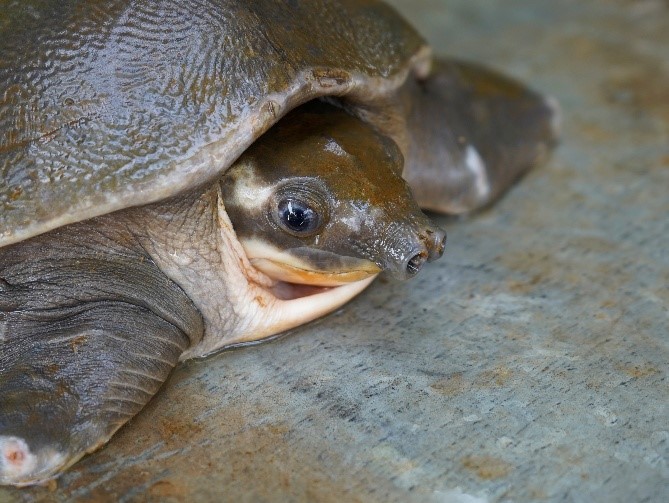
For the indigenous communities in southern Papua, the pig-nosed turtle is far from an ordinary animal. For a long time, it has been an integral part of daily life. Its meat and eggs are serve as important sources of protein, while in customary practices, it has even been used as a part of dowry in the Vriendschap River region. Traditional use is typically subsistence-based, meaning that only what is needed for household consumption is taken. As a result, its impact on wild populations has historically been relatively small.
When Market Demand Emerges
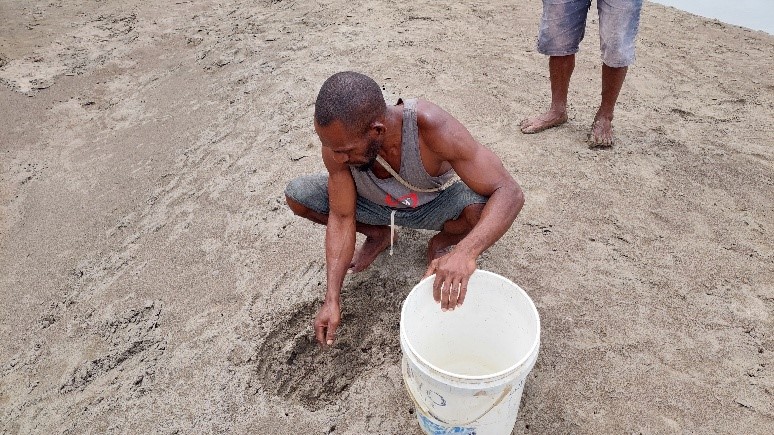
However, this situation began to change as market demand increased. Eggs and hatchlings were no longer viewed solely as food, but as valueable commodities. One story still remembered by the communities of Kao River dates back to 1997, when a foreign buyer reportedly arrived by helicopter to purchase large quantities of eggs. Since then, pig-nosed turtle eggs have come to be seen as “walking money,” symbolizing a shift from subsistence use to economic opportunity.
From Consumption to Commodity
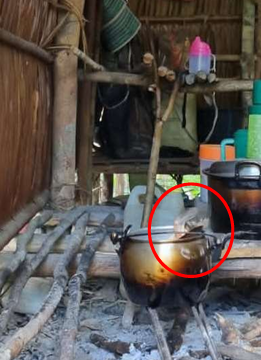 Gradually, the role of these turtles has shifted. For many community members, eggs now hold greater economic value than as a food source. Hunters prefer to sell the eggs, while the meat of adult turtles is typically consumed locally. Searching for nests and harvesting eggs has since become the primary livelihood. By setting out early in the morning by boat, hunters can return home with a harvest of considerable value—often seen as more reliable than other occupations such as farming or fishing.
.
.
Hatchlings (Tukik) as a Key Commodity
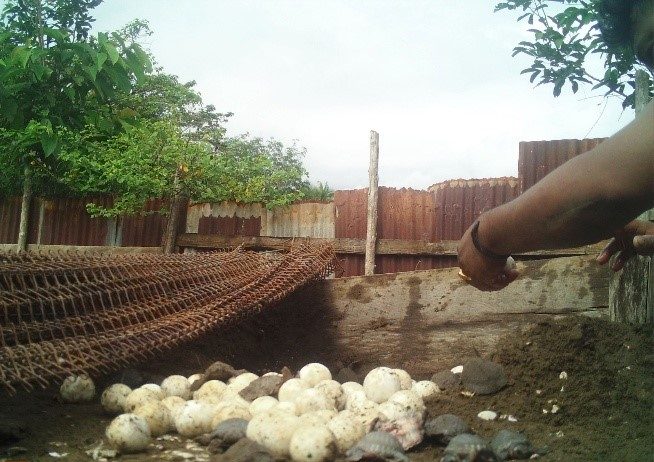 Over time, the market began to prefer hatchlings over eggs. Hatchlings are more resilient during long-distance transport, whereas eggs are easily damaged. As a result, people began incubating eggs before sale, since hatchlings could be sold at a higher price. This practice grew in popularity, further accelerating the intensive farming of pig-nosed turtles.
The Threat Behind the Benefits
For local communities, the pig-nosed turtle clearly provides economic benefits. However, excessive and continuous exploitation, combined with high dependence on natural resources and limited alternative livelihoods, is putting increasing pressure on its population. Without appropriate action, this species risks existing only in stories and memory.
The Path Toward Conservation
Pig-nosed turtles are more than just rare animals—they are the guardians of Papua’s river ecosystems. With their limited range and protected status, conservation efforts are crucial. Protecting them requires a combination of actions: safeguarding habitats from degradation, regulating use to prevent overexploitation, providing alternative sources of income for local communities, and raising awareness about the importance of this species. Without concrete actions, this unique turtles could disappear from the wild. Saving them is not just about protecting a single species, but also about maintaining the balance of the river and the life that depends on it.
