
Every dry season, the Kao River offers a unique seasonal routine for local residents. As the water recedes, sandbars emerge along the riverbanks, becoming a favorite nesting site for pig-nosed turtles (Carettochelys insculpta). This is what the community refers to as “harvest season.” For them, these nests in the sand are not merely part of the natural cycle, but an important source of income with high economic value.
Resources and Skills Behind Harvesting
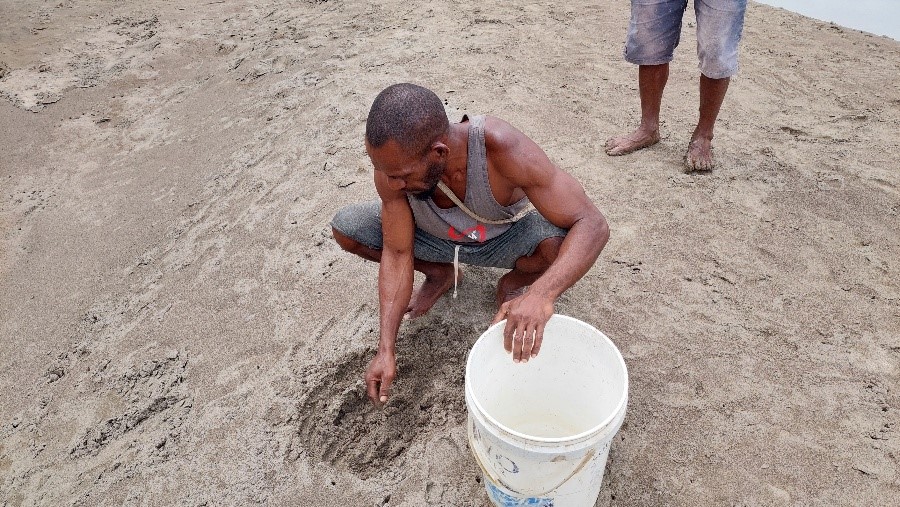
Harvesting pig-nosed turtle eggs turns out to be more than just digging in the sand. This activity requires a significant investment—especially for boat fuel—as well as skills passed down from generation to generation. Typically, the hunters set out early in the morning, walking along the riverbanks while carrying iron or wooden poles with specially shaped tips for probing the sand. With this simple tool, they can locate nests that are neatly hidden beneath the surface.
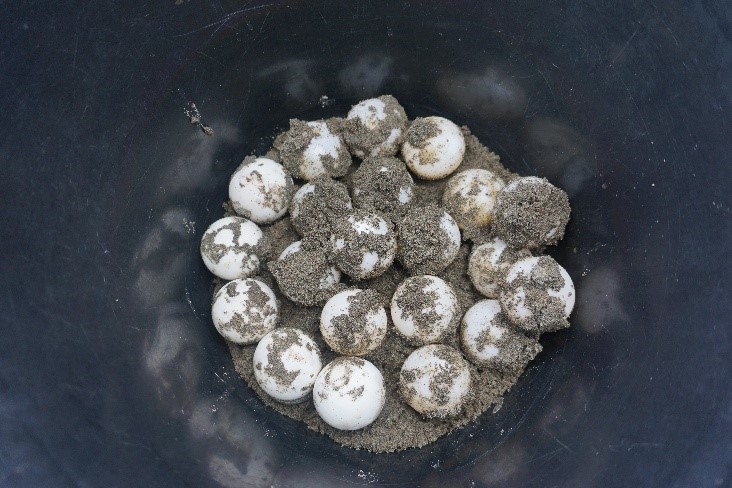
Nests that are found can be dug up immediately or marked with a small stick. If there are many nests, they are marked so they can be collected later. The collected eggs are usually placed in a bucket, with sand at the bottom and on top to protect them and keep them safe during transport. This technique is simple but effective in keeping the eggs intact until they reach the camp or the middlemen.
Harvest Season on the Sandbars
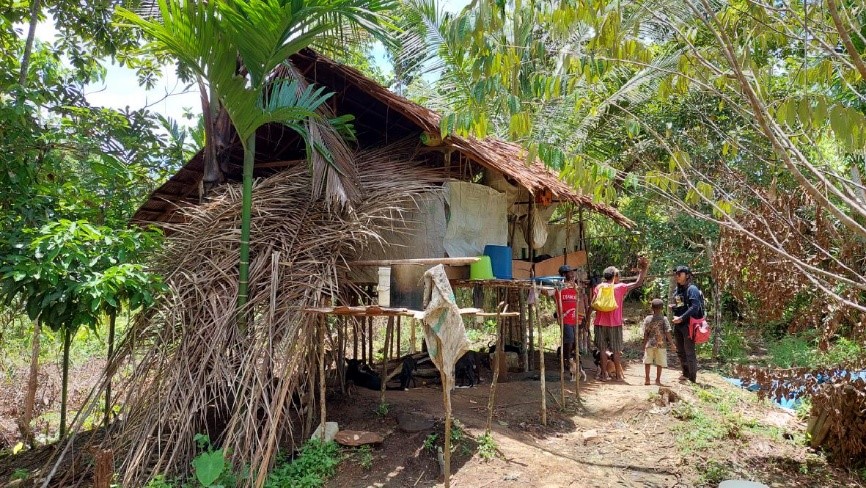
The pig-nosed turtle nesting season runs from August to December, peaking in September. During this period, hunters typically stay at the nesting sites for months at a time. They build simple huts out of wood and coconut leaves as temporary shelters, complete with hatching tanks that serve as temporary incubation areas for the eggs before they are sold.
Every morning, the sandbars are combed again in search of new nests. Unfortunately, harvesting is carried out indiscriminately. Eggs are taken from healthy nests, those flooded by the river, and even those already damaged by predators. As a result, almost no natural nests remain along the riverbank. The harvesting rate has reached 100 percent—a very high figure and certainly alarming for the conservation of this species.
Between Tradition and Threat
Behind the practice of egg harvesting, customary rules continue to play a vital role. People may only collect eggs within their traditional territory with explicit permission, and the harvest is distributed according to traditional customs. Violators—such as those who steal eggs outside the designated area—face customary penalties. This system serves as a means for the community to safeguard their rights to manage their natural resources.
Even so, the high intensity of harvesting still poses a dilemma. It’s not just the eggs that are taken home; occasionally, the female turtles are caught as well. This usually happens in the early morning, when the females are still exhausted after laying eggs, or in the afternoon when they emerge onto the sandy shore. The captured females are not sold, but rather cooked together at the camp to sustain the hunters who spend weeks away from home.
The Middle Ground: Economy and Conservation
If all the eggs were collected every season, almost no new generation of pig-nosed turtles would survive in the wild. Combined with the capture of female adults, the population is clearly at risk of a drastic decline. From an ecological perspective, this is a warning sign: without regeneration, this unique species could slowly disappear from its natural habitat.
This is a classic dilemma: the economic needs of the community clash directly with conservation challenges. For local residents, turtle eggs are an important source of income—and for some, even their primary livelihood. But on the other hand, overharvesting clearly threatens the species’ survival.
The solution isn’t simply to ban the practice, but to find a middle ground. Educating people about the importance of leaving some nests intact, stopping the capture of female turtles, and creating alternative sources of income could be key steps. If managed wisely, the knowledge and skills of hunters can actually become a major asset in supporting conservation. In this way, a balance between the community’s economy and environmental sustainability can be maintained.
