
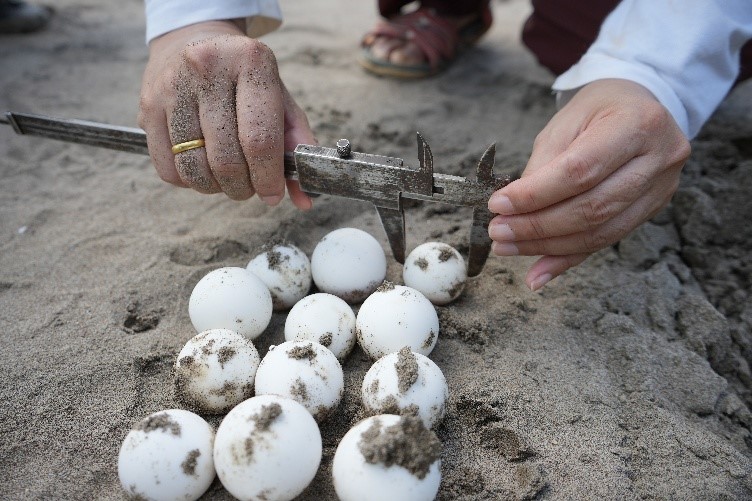
Photo: Researchers from IPB University measuring pig-nosed turtle eggs found along the Kao River
BOVEN DIGOEL – Harvesting high-economic-value natural resources is nothing new in Indonesia. From forests and rivers to the sea, this practice often serves as a primary livelihood for local communities. Problems arise when exploitation occurs without limits, bringing inevitable risks to the sustainability of wildlife.
This is clearly visible in South Papua, precisely along the Kao River, where the eggs of the pig-nosed turtle ( Carettochelys insculpta ) are harvested every season without interruption. Ironically, this unique species is listed as a protected animal.
Research by IPB University in the Kao River notes that local communities continue to harvest eggs in large quantities outside government-established routes, subsequently selling them through illegal trade.
In fact, the utilization of pig-nosed turtles has been regulated by the government through a quota system for ranching activities. The scheme is simple: half of the eggs may be utilized, while the other half must be released back into the wild.
High market demand drives continuous exploitation, far exceeding the official quotas set by the government. In 2022, the national quota was set at 10,000 eggs, with official locations restricted only to Mimika and Asmat. Permits are also limited, granted exclusively to a single company, CV Alam Nusantara, via a decree from the Minister of Environment and Forestry (LHK).
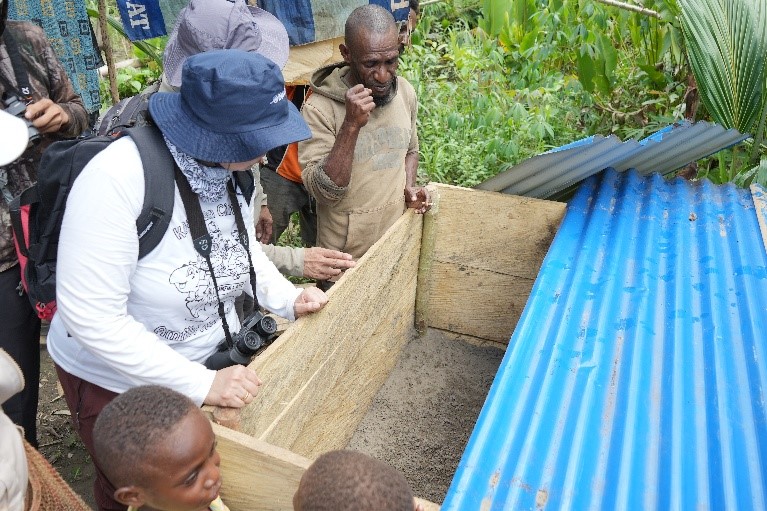
Photo: High market demand drives continuous exploitation of the pig-nosed turtle, far exceeding official government quotas. Therefore, efforts from various parties are required to undertake conservation.
This disparity highlights the complexity of balancing economy and conservation. Total bans typically fail because they directly clash with the livelihood needs of the community. However, if harvesting is left unregulated, the fate of the pig-nosed turtle in the wild is clearly threatened.
Therefore, a middle ground must be sought—through an approach that can accommodate economic benefits while preserving ecological sustainability. This situation is not just about illegal trade, but also about how to maintain a balance between community economics and ecological sustainability.
One frequently cited solution is the implementation of clear and fair harvest quotas. This requires more than just rules on paper; it demands real agreements with the communities directly involved on the ground. By doing so, they retain economic benefits, while the pig-nosed turtle gets the opportunity to reproduce.
Extension services and mentoring are also crucial to ensure communities realize that leaving a portion of the eggs in the wild is actually an investment for the future. Equally important, populations must be continuously monitored to determine whether current harvesting remains safe or has crossed the limit.
Collaboration for Sustainability
Pig-nosed turtle conservation cannot be carried out by a single party alone. Collaboration is required among the government, local communities, academics, and even private entities operating around the habitat.
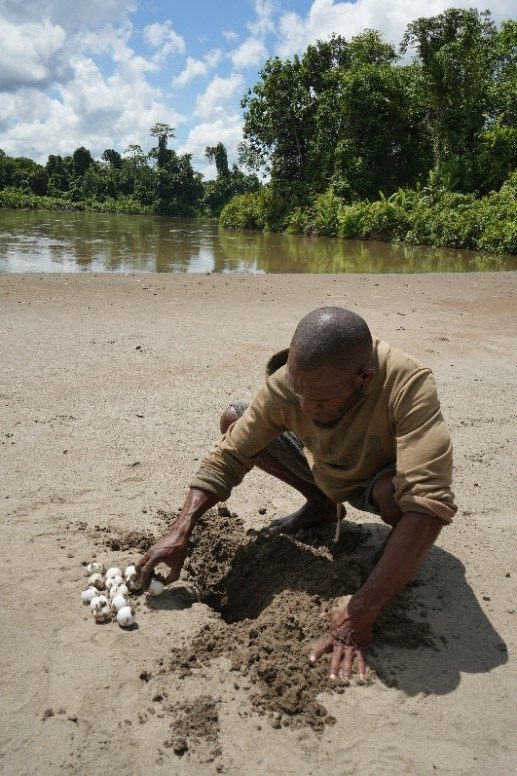
Foto: Sungai Kao menjadi salah satu habitat kura-kura moncong babi di Papua
The government needs to ensure regulations are enforced with strict law enforcement, while academics can assist by providing scientific data to support decision-making. Communities themselves play a vital role as implementers in the field, as they interact daily with this turtle’s habitat. When economic incentives from legal channels are genuinely felt, the drive to engage in illegal practices can diminish.
Ultimately, pig-nosed turtle conservation is not only about saving a single endangered species, but also about maintaining the balance between humans and nature. If managed wisely, this unique species can continue to thrive in the rivers of Papua while providing ongoing economic benefits to the communities relying on its surrounding environment.
The challenges are certainly great, but the hope is simple: to find a middle ground so that utilization does not turn into exploitation, allowing economy and tradition to go hand in hand with efforts to preserve natural sustainability. (ESG)
