

The Greater Bird-of-Paradise is not only an icon of Papua’s natural beauty, but also an integral part of the cultural heritage of Indigenous Peoples. Behind efforts to conserve this endemic bird, indigenous communities play an irreplaceable role as forest guardians, habitat protectors, and custodians of ecological values passed down from through generations.
More Than Just a Bird: The Spiritual Meaning of the Bird-of-Paradise
Indigenous Papuan communities play an important role in preserving birds of paradise. With their knowledge inherited over generations, they know when the mating season takes place, which trees are used for lek, and recognize which food tree species must be preserved. Customary laws often prohibit the cutting of certain trees or the hunting of animals, including birds-of-paradise. For some communities, these birds of paradise are even considered sacred, spiritual symbols that must be respected.
For many indigenous Papuan communities, the Greater Yellow Bird-of-Paradise are not just beautiful birds, but also symbols of ancestral spirits. Its graceful movements atop tall trees are seen as a connection between the earth and the sky. Its presence in the forest signifies that humans are still living in harmony with nature and tradition. Conversely, the disappearance of birds-of-paradise from an area is often interpreted as a sign that this balance has been disturbed.
Sacred Forest: A Hidden Stronghold for the Bird-of-Paradise
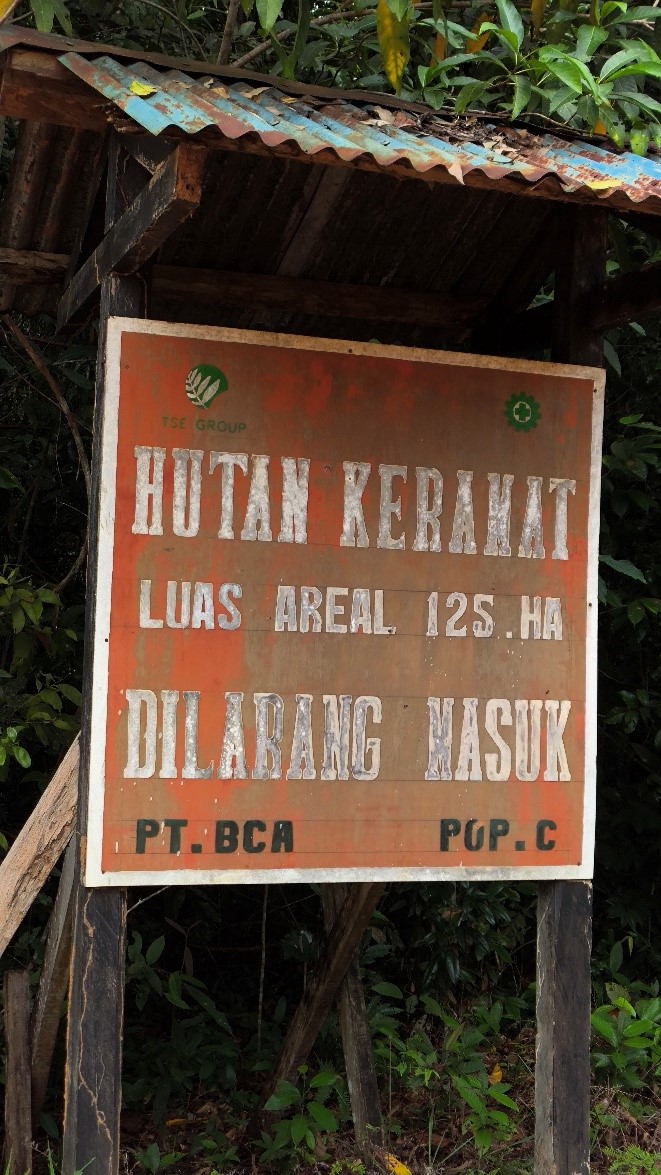
In Papua, certain forests are not only rich in biodiversity but also hold deep spiritual significance for Indigenous communities. One such area is the High Conservation Value (HCV) forest managed by TSE Group, which known locally as a sacred forest. For indigenous communities, this forest is protected by strict customary rules—it must not be cut down cleared indiscriminately or damaged. Without much awareness, these rules have made the sacred forest a natural conservation stronghold.
Within these forests, the Greater Bird-of-Paradise and other iconic species can continue to live safely, perform their mating dancse, and reproduce in their natural habitat.
Because of their sacred status, indigenous communities usually strictly prohibit any form of activity in these sacred forests—from cutting down trees and hunting to entering without permission. These customary rules act as a natural shield, protecting both flora and fauna. In many ways, sacred forests function as informal conservation areas born out of local wisdom.
Interestingly, large trees used by male birds-of-paradise for lekking are frequently found in sacred forests that have remained untouched by human activity. It is therefore not surprising that some of the most active and stable lekking sites are found around these sacred forests.
Sacred Forest as Natural Conservation
Sacred forests demonstrate that conservation is not always about science or formal rules. In many cases, local culture and beliefs serve as the most effective “protectors of nature.” Protecting forests because they are considered sacred has proven to be highly effective in maintaining ecological functions naturally. Local cultural values and beliefs are often respected and upheld more consistently than national laws.
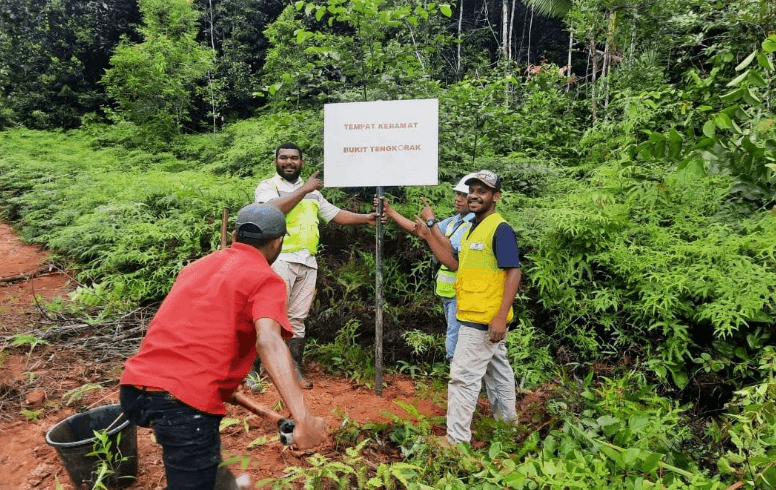
Installation of sacred forest signboards around the TSE Group’s HCV area
Papua’s sacred forests are not only a cultural legacy, but also part of a natural conservation system that has existed for centuries. Respecting, recognizing, and supporting the protection of sacred forests also strengthens the conservation of rare species such as the Greater Yellow Bird-of-Paradise and helps maintain the overall balance of Papua’s ecosystem.
