
Who would have thought that behind its shiny golden feathers and captivating lekking dance, the Greater Bird-of-Paradise (Paradisaea apoda) holds an important secret for the survival of tropical forests? Its ecological role is rarely recognized by many people, yet without this magnificent bird, forest regeneration could be significantly disrupted.
Frugivore: Guardian of Forest Regeneration

Two Greater Bird of Paradise individuals on a bintagur tree branch
The Greater Bird-of-Paradise is known as a frugivorous bird, which means that its main food source is fruit. In its daily life, this bird moves from one tree to another in search of ripe fruit. What may seem like a simple feeding habit plays a major role in the ecosystem. The birds do not only just eat fruit, but it also acts as natural seed dispersers.
Some seeds when bird feeds can fall to the ground, while other seeds that are swallowed will come out again with feces in places that are often far from the parent tree. In this way, Greater Bird-of-Paradise helps new plants grow in various locations, maintaining forest diversity and ensuring that natural regeneration continues.
A Natural Agent of Ecological Succession
When the research team observed its behavior, it was clear that this bird of paradise loved to eat a variety of forest fruits—from nibung, mendarahan, pala (nutmeg), beringin rambat (climbing figs), to jambuan. Uniquely, the seeds from these fruits are not only eaten to fill their stomachs.
Seeds that come out of the bird’s digestive tract often fall far from the parent tree, providing opportunities for new seedlings to grow themselves elsewhere.
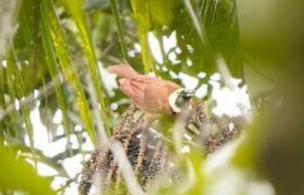
A Great Yellow Bird of Paradise eating nibung fruit
Seeds eaten by birds of paradise are often dispersed when these birds jump from one tree canopy to another. As a result, new plants can grow in empty spaces, open areas, or even forests that have been disturbed. Through this simple method, the Greater Bird-of-Paradise contributes to plant diversity and accelerates forest recovery. It is no wonder, it can be considered one of nature’s important agents in the process of ecological succession.
Birds-of-Paradise and Biodiversity
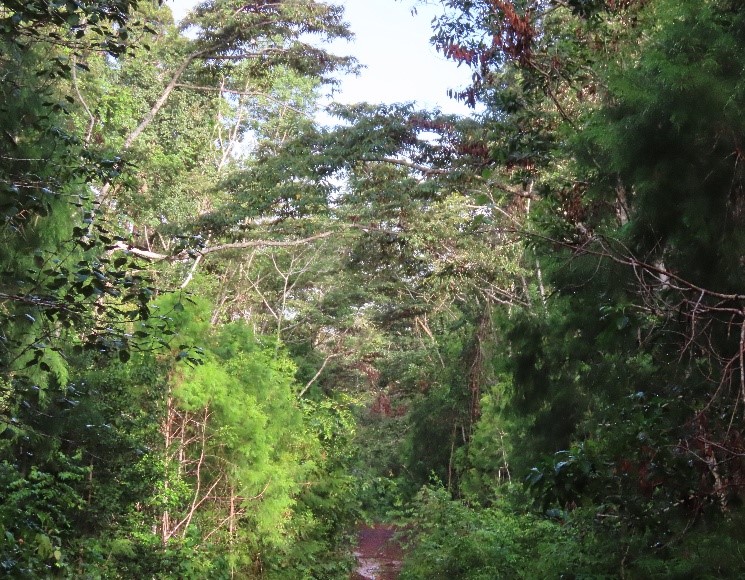
Natural regeneration in Asiki Forest, South Papua
With their ability to travel long distances and move between high forest canopies, the Greater Bird-of-Paradise play an important role in increasing forest biodiversity. Their extensive movements enable the dispersal of seeds from various plant species to different areas, including locations far from the parent trees. Each seed dispersed is like a small puzzle piece of forest life, ensuring a diverse, healthy, and thriving ecosystem.
The role of fruit-eating birds such as the Greater Bird-of-Paradise extends beyond just one or two types of trees. Many tropical forest
plants depend on animals for seed dispersal. Without them, plant diversity would decline, and the structure of the forest could become homogeneous or degraded.
More Than Just a Bird
Protecting Greater Bird-of-Paradise is not just about ensuring that this beautiful bird soaring freely, but also about safeguarding the forest continues to breathe. From the fruits it consumes to the seeds it disperses, the bird helps the forest regenerate and sustain the diversity of life within it. Every effort to conserve the Greater Bird-of-Paradise is, in essence, an effort to protect Papua’s tropical rainforests and all the creatures that depend on them.
